
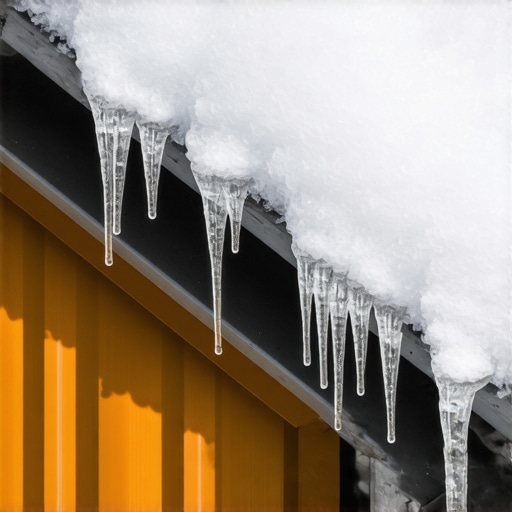
The Day the Flat Roof Became a Swimming Pool
Walking on that roof felt like walking on a sponge. I knew exactly what I’d find underneath before I even pulled my utility knife out. It was a grey, overcast Tuesday in a climate where the mercury was already flirting with the freezing mark. The property manager was frantic, pointing at a ceiling tile in the lobby that was sagging like a wet diaper. He kept saying, ‘But it’s a new TPO roof! We just had it done two years ago!’ That’s the problem with commercial roofing; everyone thinks a white membrane is a magic shield. But physics doesn’t care about your warranty if the installer didn’t understand molecular fusion. As a veteran who has spent more time on a roof deck than in my own living room, I can tell you that a TPO roof is only as good as its weakest five inches. And usually, those five inches are at the seams. When the first real winter storm hits, and the temperature drops forty degrees in six hours, that membrane is going to shrink. If those seams aren’t welded correctly, they won’t just leak—they will unzip like a cheap jacket.
“A roof is only as good as its flashing.” – Old Roofer’s Adage
The Physics of Failure: Why TPO Unzips
In the trade, we talk a lot about ‘Thermal Shock.’ In northern climates, your roof is a battlefield. During the day, the sun might hit the membrane, even in winter, warming it up. But at night, the temperature plummets. TPO, or Thermoplastic Polyolefin, is a great material, but it has a high coefficient of linear thermal expansion. This means it wants to move. It wants to pull. When the cold hits, the entire sheet—sometimes a hundred feet long—contracts. This puts immense tension on the heat-welded seams. If your local roofers were rushing to finish the job before the weekend and didn’t calibrate their robot welder, you’re left with what we call a ‘cold weld.’ To the naked eye, it looks fine. It looks sealed. But it’s a lie. The two layers of membrane are merely stuck together, not fused. Real fusion happens when the top and bottom layers of TPO melt into one another, creating a single, monolithic piece of plastic. Without that, the tension of a winter freeze will find the weak spot and pop it open. This is precisely the specific reason TPO seams pop after the first freeze, and it’s a nightmare to find once the snow starts falling.
The 5-Second Test: The Seam Probe
You don’t need a degree in structural engineering to know if your roofer screwed you over. You just need a seam probe—or even a flat-head screwdriver if you’re careful—and five seconds. Here is the test: find a seam where two sheets of TPO overlap. Run the tip of the probe along the edge of the seam while applying firm, outward pressure. If that probe even slightly dips into the edge or, god forbid, slides right under the flap, your roof is a ticking time bomb. A proper weld should be impossible to penetrate. If it ‘pops’ open with minimal effort, you’re looking at a ‘cold weld’ or a ‘false weld.’ This usually happens because the installer didn’t clean the membrane with weathered membrane cleaner or they ran the hot-air welder too fast for the ambient temperature. In commercial roofing, speed kills quality. If you find these gaps, you are likely dealing with the specific TPO seam failure that most maintenance teams overlook until the water starts ruining inventory.
The Mechanism of the ‘Sponge Effect’
When a seam fails in winter, it’s not just a drip. It’s capillary action. Water from melting snow sits on the roof. Because of the thermal bridge created by the building’s heat escaping through the roof deck, that bottom layer of snow turns to water. This water finds the ‘pop’ in the seam and is literally sucked underneath the membrane by hydrostatic pressure. Once it’s under there, it doesn’t just stay in one spot. It travels. It gets soaked up by the polyiso insulation boards. Now, instead of an R-value that keeps your building warm, you have a giant, frozen sponge sitting on your steel deck. This is the hidden moisture trap that rots commercial roof decks under new TPO, and by the time you see the leak inside, the damage to the decking is already done. I’ve seen ‘squares’ (that’s 100 square feet for you civilians) of plywood turned to oatmeal because a roofer missed a three-inch section of a seam.
The Trap of the ‘Low Quote’ Contractor
I get it. You see a quote for a TPO roof or a tile roof, and you want to save twenty grand. But ‘trunk slammers’ and fly-by-night roofers save money by skipping the details that matter in a winter storm. They skip the ‘Termination Bar’ at the parapet walls. They don’t install crickets to move water toward the scuppers. They don’t test their welds every morning and every afternoon. They just want to get the ‘squares’ down and get the check. But a ‘Lifetime Warranty’ doesn’t mean anything when the company changes its name every three years to avoid litigation. Most 2026 commercial roofing warranties are worthless because they don’t cover ‘consequential damages’ or they are voided the moment an unauthorized person walks on the roof. You need to know that your roofer performed a ‘Pull Test’ and a ‘Peel Test’ on-site before they ever started the main run. If they didn’t, they were just guessing with your money.
“Price is what you pay. Value is what you get.” – Warren Buffett
The Fix: Surgery vs. Band-Aids
If your 5-second test revealed gaps, don’t let anyone tell you that a tube of caulk is the answer. TPO doesn’t like most sealants; they eventually peel off because of the plasticizers in the membrane. The only real fix is ‘The Surgery.’ This involves cleaning the old membrane—which is harder than it sounds because TPO oxidizes over time—and heat-welding a new ‘target patch’ or ‘cover strip’ over the failed area. But even then, if the insulation underneath is saturated, you’re just sealing in the rot. You have to be aggressive. You have to cut out the wet stuff, replace the board, and then weld the new membrane. If you see your roofer just slapping some goop over a seam, fire them. They are setting you up for a catastrophic failure when the next ice dam forms. You should also check for the missing termination bar, which is another classic shortcut that leads to wall flashings peeling off during high winds.
The Cost of Waiting
Every day that water sits under your TPO membrane, it is eating your building. It’s corroding the fasteners that hold the roof down. In a high-wind event, those corroded fasteners can pull right out of the deck, and you’ll watch your entire roof peel off like a lid on a sardine can. If you’ve noticed ponding water or if your seams look ‘fat’ and un-fused, get a real pro out there. Don’t wait for the dining room table to become a water feature. Check your seams, run the probe, and hold your contractor’s feet to the fire before the snow flies. Knowing the simple TPO adhesion test that proves your roofer cut corners is your best defense against a multi-million dollar disaster.