
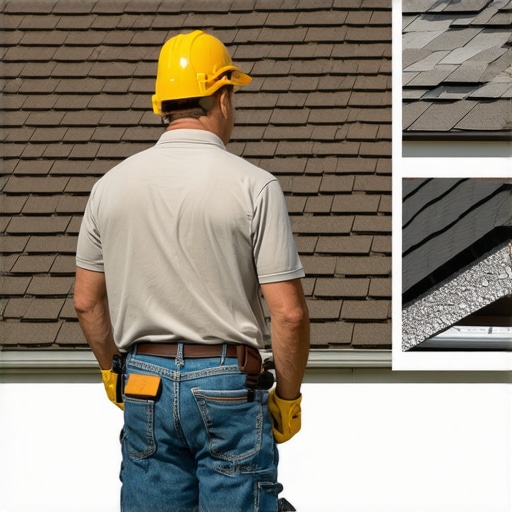
The drip-drip-drip on your living room ceiling isn’t just a nuisance; it is the sound of a failure years in the making. In the high-desert heat of the Southwest, where the sun beats down at a relentless 110 degrees for three months straight, a roof isn’t just a cover—it is a thermal battlefield. Most local roofers see a roof as a collection of squares and shingles. I see it as an intricate plumbing system designed to manage the violent, sudden deluges of monsoon season. When the water starts finding its way into your drywall, it is rarely because the material failed. It is because someone skipped the forensic details of flashing.
Walking on that roof felt like walking on a sponge. I knew exactly what I’d find underneath. This was a tile roof in a high-end neighborhood, and from the ground, it looked pristine. But under the boots, the give in the plywood told the story of five years of slow-motion destruction. When we peeled back the concrete tiles, the underlayment wasn’t just wet; it had the consistency of wet cardboard. The culprit? A single piece of head-wall flashing that had been ‘caulked’ instead of properly integrated into the masonry. This is the reality of the roofing trade today: speed over science.
The Physics of Failure: Why ‘Good Enough’ Leaks
Before we look at the specific errors, you have to understand the physics. Water is patient, and in our climate, it is also aided by thermal expansion. During the day, your roof deck reaches 160°F. At night, it drops to 70°F. That 90-degree swing causes every material on your roof to grow and shrink. If a roofer relies on a bead of caulk to seal a transition, that caulk is going to tear away from the substrate within two seasons. Once that seal is broken, capillary action takes over. This is the process where water is sucked upward into tight spaces against the force of gravity. A gap the width of a credit card is all it takes for a monsoon gust to push a quart of water under your tiles and into your insulation.
“A roof is only as good as its flashing.” – Old Roofer’s Adage
1. The Reglet Cut vs. The ‘Smash and Daub’
The first major failure I see with local roofers involves chimney and wall transitions. Most contractors take a piece of L-flashing, nail it to the wall, and run a fat bead of sealant along the top edge. In the trade, we call this the ‘smash and daub.’ It’s fast, it’s cheap, and it’s a ticking time bomb. In the Southwest, UV radiation eats polyurethane for breakfast. When that sealant cracks, water runs down the wall, hits the top of the flashing, and goes straight behind it.
A forensic-grade installation requires a reglet cut. We take a diamond-blade saw and cut a 1-inch deep groove directly into the mortar or stucco. The metal flashing is then tucked into that groove and mechanically fastened. This creates a permanent, physical overhang. Even if the secondary sealant fails, the water has no choice but to stay on the outside of the metal. If you are looking at tile roof quotes and they don’t mention reglet cuts or counter-flashing, they are selling you a five-year roof, not a fifty-year roof.
2. The Kickout Flashing: The Missing Link
If you have a roof line that meets a vertical wall—like where a garage roof hits the second story of the house—you need a kickout flashing. This is a small, angled piece of metal at the end of the run that kicks the water away from the wall and into the gutter. Without it, the water follows the roof edge and pours directly into the corner where the wall meets the fascia. This is the number one cause of rotten fascia boards and interior mold. Most local roofers omit this because it’s ‘ugly’ or they don’t want to take the time to fabricate it on-site. But without it, you are effectively funnelling the entire volume of your roof’s runoff into your siding.
3. The Dead Valley and the Cricket
On commercial properties or large residential tile roofs, we often see ‘dead valleys’—flat spots where two slopes meet a vertical wall. In these areas, water doesn’t just flow; it ponds. On TPO roofing, ponding water is the enemy of every seam. If a roofer doesn’t install a cricket—a small, diamond-shaped sub-roof that diverts water toward the drains—that standing water will eventually find a shiner (a misplaced nail) or a cold-welded seam. I’ve seen TPO membranes shrink and pull away from the walls because they were constantly submerged and then baked dry. It’s a cycle of abuse that no material can survive without proper geometry. If your commercial roofer isn’t talking about slope-to-drain or crickets, they are setting you up for a catastrophic deck failure.
“Water is a liquid that seeks its own level, but it also seeks the path of least resistance, which is usually your drywall.” – Forensic Building Analysis Manual
The ‘Band-Aid’ vs. The Surgery
When I’m called out to investigate a leak, the homeowner usually wants to hear that a $200 tube of ‘stuff’ will fix it. That is the Band-Aid. If your flashing is wrong, the only real fix is surgery. This means removing several squares of tile or shingles, tearing off the failed metal, and re-installing it according to SMACNA (Sheet Metal and Air Conditioning Contractors’ National Association) standards. It’s expensive, it’s loud, and it’s the only way to sleep when the clouds turn black on the horizon. If you try to save money by hiring a ‘trunk slammer’ to slap more caulk on the problem, you’re just paying for a temporary stay of execution. You’ll eventually find yourself doing a tile roof repair that includes replacing the entire plywood deck because you waited too long.
How to Spot a Real Roofer in a Sea of Salesmen
The roofing industry is flooded with salesmen who have never actually swung a hammer. They use fancy software to estimate your roof from a satellite image, but they can’t tell you the difference between a lead jack and a plastic boot. To protect your home, you have to ask the forensic questions. Ask them how they handle the ‘valley-to-eave’ transition. Ask if they use ‘ice and water shield’ in the valleys, even if the local code doesn’t strictly require it (it should). Ask them how they prevent wicking on TPO edges. Most importantly, look at their previous work. If their flashing looks like a crumpled soda can covered in grey goo, walk away. You want clean lines, mechanical fasteners, and a contractor who understands that the metal is more important than the shingle. If you’ve already had a bad experience, you might need to know why only 2 out of 10 roofers actually notice these critical errors before they start the job. Don’t be the homeowner who learns about flashing physics the hard way—through a hole in their ceiling.
Comments are closed.