
The Smell of a Scam: Why Your Warranty is Just Paper
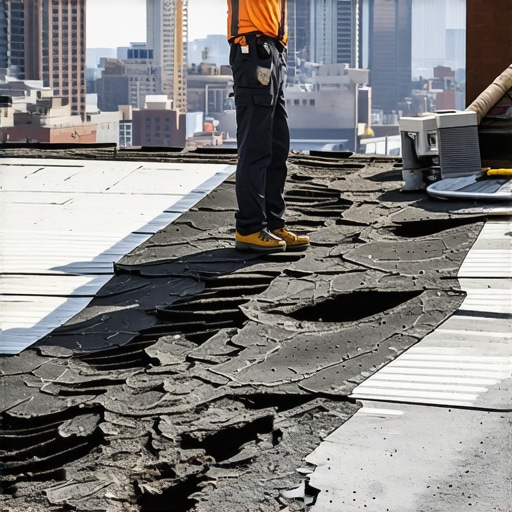
I remember standing on a sprawling TPO deck in the middle of a 115-degree Phoenix July. The air didn’t just shimmer; it tasted like scorched plastic and ozone. My old foreman, a grizzly guy who smelled like hot tar and cheap coffee, used to lean over his trowel and tell me, ‘Kid, water is patient, but the sun is a predator. It will wait for you to miss one nail, then it’ll cook the life out of that deck until it’s as brittle as a dry leaf.’ He was right. That roof was barely five years old, but the owner was holding a ’30-year NDL warranty’ that wasn’t worth the glossy paper it was printed on. As a forensic roofer with 25 years under my belt, I’m tired of seeing business owners get fleeced by the big-print promises and small-print exclusions of 2026 commercial roofing contracts.
The Physics of Failure: Why Materials Quit
In the Southwest, we don’t just have weather; we have thermal warfare. When we talk about commercial roofing, especially TPO roofing, we’re talking about thermoplastic polyolefin. Manufacturers love to brag about its reflectivity, but here is the technical reality: UV radiation isn’t just light; it’s a bombardment of high-energy photons that physically break the molecular chains of the polymer. Over time, you’ll notice ‘chalking’—that white powder on your fingers when you touch the roof. That is the roof literally disintegrating. Once that top sacrificial layer is gone, the ‘scrim’—the polyester reinforcement grid inside—is exposed. This is where mechanism zooming matters. That scrim acts like a kerosene wick. Once moisture hits an exposed scrim, capillary action pulls that water sideways, feet away from the original leak, saturating your insulation boards and turning your R-value to zero before you ever see a drop on the warehouse floor.
“A roof is only as good as its flashing.” – Old Roofer’s Adage
The ‘Acts of God’ and Maintenance Trap
Most local roofers sell you a warranty as a safety net, but it’s actually a sieve. Have you read the 2026 exclusions lately? If you haven’t performed bi-annual documented inspections, your warranty is likely void. If you have a tile roof and a storm hits with winds exceeding 55 mph—even if it’s not a named hurricane—that ‘Lifetime’ protection evaporates. The manufacturers call it an ‘Act of God.’ I call it a get-out-of-jail-free card for the supplier. If your installer missed a single shiner (that’s a nail that missed the rafter and is just hanging out in the breeze), the movement of the building will eventually push that nail head through the membrane. The manufacturer will blame the installer, the installer will have changed their LLC name three times since 2024, and you’ll be left holding the bill for a full tear-off.
TPO vs. Tile: The Desert Dilemma
For my clients in the desert zones, the choice between a tile roof and TPO comes down to thermal expansion. A commercial building can grow and shrink by an inch or more between the 40-degree desert night and the 140-degree roof-deck afternoon. Tile is heavy; it has mass. It handles the heat but the underlayment—the actual waterproofing layer—is what fails. It gets baked until it’s ‘potato chip’ brittle. TPO, on the other hand, is supposed to be flexible, but poor local roofers often over-tighten the plates and fasteners. When the roof tries to shrink at night, it creates ‘tenting.’ You’ll see the membrane pulling tight over the fasteners like skin over knuckles. Eventually, it pops. If you are seeing these signs, you should check out these 7 TPO roofing mistakes that drain commercial budgets in 2026 to see if your crew cut corners during the install.
The Cost of ‘Cheap’ and How to Spot It
I’ve walked onto forensic scenes where the commercial roofing looked fine from the parking lot, but the crickets—those small peaked structures designed to divert water toward the scuppers—were built out of scrap wood and barely flashed. Water was pooling behind them, creating a hydrostatic head that forced moisture upward under the laps. This is a classic ‘trunk slammer’ move. They save $500 on materials and cost you $50,000 in structural rot. Many owners are shocked to find out that their ‘comprehensive’ contract didn’t cover the very things that actually fail. You need to be vigilant about 6 sneaky commercial roofing fees to avoid in 2026 contracts before you sign on the dotted line. If you notice your roof isn’t shedding water properly, don’t wait for the mold to start growing; investigate is your commercial roof pooling 5 fast 2026 drainage fixes immediately.
“The National Roofing Contractors Association (NRCA) recommends that all commercial roof systems be inspected at least twice a year to maintain warranty validity.” – NRCA Technical Manual
The Surgeon’s Solution: Don’t Buy a Warranty, Buy a System
If you want a roof that actually lasts until 2046, stop looking at the warranty and start looking at the mil-thickness and the flashing details. A 60-mil TPO is the bare minimum, but an 80-mil system gives you that extra thickness for UV protection. Ensure your local roofers are using stainless steel fasteners if you’re anywhere near salt or high humidity, and demand ‘walk pads’ around your HVAC units. Most leaks I investigate start because a mechanic dropped a heavy tool or a panel door onto the membrane and didn’t tell anyone. That small puncture, combined with the desert’s evening cooling, sucks moisture into the system like a vacuum. Forget the marketing fluff. A warranty is a legal document designed to protect the manufacturer. A properly flashed, over-engineered roof system is the only thing designed to protect you.
Comments are closed.