
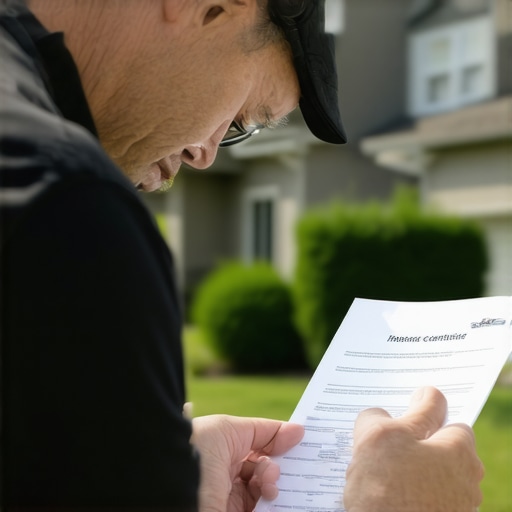
The Knock, The Pitch, and The Paperwork Trap
The storm clears, the sun peaks through the clouds, and within two hours, your doorbell is ringing. They have a truck, they have a ladder, and they have a piece of paper that says ‘Certificate of Liability Insurance.’ In the trade, we call these guys ‘tailgate contractors.’ They are the ghosts of the industry, here today to collect a deposit, and gone tomorrow when your living room ceiling starts looking like a topographical map of the Great Lakes. After 25 years on the roof deck, I can tell you that a PDF of an insurance certificate is about as reliable as a cardboard umbrella in a hurricane unless you know how to verify it. If you are dealing with commercial roofing or even a complex tile roof, the stakes are not just a few hundred bucks in repairs; they are your entire property value.
The Anatomy of a Fake: Beyond the Logo
Most homeowners look for a logo and a date. That is exactly what the scammers want you to do. I have seen guys take an old certificate from a legitimate company they worked for three years ago, scan it, and change the dates in Photoshop. It takes ten minutes and can save them five thousand dollars in premiums while leaving you on the hook for a hundred-thousand-dollar injury claim. When you are looking at local roofers, you have to look for the ‘Certificate Holder’ block at the bottom. If your name and address are not typed in that box, that certificate is just a generic flyer. It does not prove that the policy is active for your specific project. My old foreman used to say, ‘Water is patient. It will wait for you to make a mistake.’ He was talking about flashing, but it applies to contracts too. If you make a mistake on the insurance, the legal system will be just as patient as the water as it drains your bank account.
“A roof is only as good as its flashing.” – Old Roofer’s Adage
The Physics of Risk: Why Insurance Matters for TPO and Tile
Let’s talk about the actual mechanics of why an uninsured roofer is a hazard to your structural health. When installing TPO roofing on a commercial deck, you are dealing with heat-welded seams. A ‘shiner’—that is a nail that missed the joist—can create a thermal bridge that pulls warm, moist air from your building into the cold attic space. In cold climates like Denver, this causes condensation to drip back onto your insulation, leading to rot that you won’t smell until it is too late. If an uninsured roofer burns through your membrane with a hot-air welder, who pays for the deck replacement? Not him. He will be halfway to the next state before the smoke clears. You need to perform 5 license checks for local roofers to avoid 2026 scams to ensure you are not inviting a liability nightmare onto your property.
The Workers’ Comp Shell Game
General Liability is the easy part. The real monster is Workers’ Compensation. In many states, if a roofer falls off your house and doesn’t have insurance, you are legally considered the ’employer’ because you hired them. Suddenly, you are responsible for their medical bills, their rehab, and their lost wages for the rest of their lives. I once saw a guy slip on a ‘fishmouth’—a small wrinkle in the underlayment—on a steep tile roof. He ended up with a broken pelvis and the homeowner ended up in a three-year lawsuit. This is why hiring local roofers with contract red flags is such a dangerous game. If they can’t show you a current Workers’ Comp policy that lists ‘Roofing’ as the classification code (Code 5551), they are likely ‘ghosting’ their employees or misclassifying them as ‘painters’ to save money. If the code is wrong, the coverage is void.
The Forensic Verification Process: Three Steps to Safety
You don’t need a law degree to spot a fake; you just need a phone. Step one: Call the insurance agency listed on the certificate. Do not use the phone number on the certificate itself; look the agency up on Google. Scammers have been known to put their buddy’s cell phone number on the form. Step two: Ask the agent for a ‘Certificate of Insurance’ issued directly to you. This makes you a ‘Certificate Holder,’ and the insurance company is then legally obligated to notify you if the policy is cancelled or expires mid-job. Step three: Check the ‘Description of Operations.’ If you are getting a commercial roofing job but the policy says ‘Residential Gutters Only,’ you are not covered. This is one of those scams local roofers use to overcharge you while providing zero protection.
“Building codes are the floor, not the ceiling, of quality construction.” – Architecture Axiom
The Cost of ‘Cheap’ is Always Higher
The bid comes in $4,000 lower than the others. Why? Because legitimate roofing companies pay massive premiums for insurance, safety training, and proper disposal fees. The guy faking his certificate doesn’t have those overheads. He is going to skip the ‘cricket’—the small peak behind your chimney that diverts water—and use the cheapest caulk he can find at the big-box store. He is going to leave ‘shiners’ in your valleys that will rust out and leak in three winters. By the time you find the leaks, his ‘insurance’ is as fake as his 50-year warranty. For the brutally honest truth about hiring local roofers without getting ripped off, you have to realize that the certificate is the foundation of the entire contract. If the foundation is built on a lie, the roof will be too. Don’t let a ‘trunk slammer’ turn your home into a forensic crime scene. Verify the paper, check the codes, and never pay a dime until you have the ‘Certificate Holder’ status in your hand.