
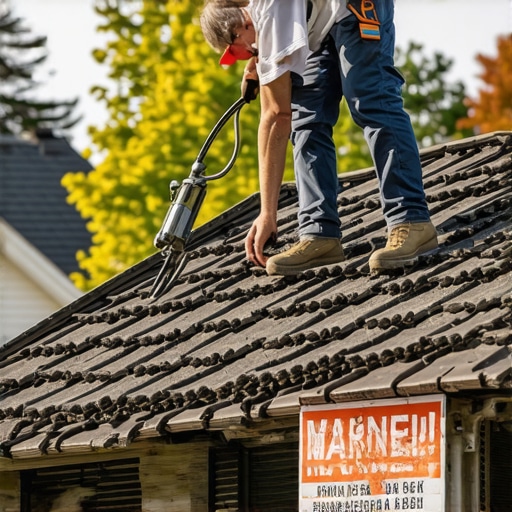
Walking on that roof felt like walking on a sponge. I knew exactly what I’d find underneath: a forty-thousand-dollar disaster born from a roofer who thought he could skip the mechanical fasteners on a high-wind Denver slope. The TPO membrane was stretched tight like a drum, but the insulation boards below had disintegrated into a soggy, fibrous mash. This wasn’t a material failure; it was a human failure. After twenty-five years in this trade, I’ve seen more ‘oatmeal plywood’ than I care to count, and it almost always starts with a piece of paper—a poorly written contract that left the homeowner defenseless.
The Mountain West Reality: Why Your Contract Needs Teeth
In the Denver area, we don’t just deal with rain. We deal with thermal shock. You can have an eighty-degree afternoon followed by a twenty-degree night. Materials expand and contract with a violence that shakes lesser roofs apart. If your local roofers aren’t accounting for this physical reality in their scope of work, you’re just buying a temporary band-aid. The UV radiation at a mile high eats through low-grade polymers like acid. If you are looking at commercial roofing, specifically TPO roofing, you need to be aware of the specific 7 TPO roofing mistakes that often start with vague contract language regarding weld temperatures and membrane thickness.
“A roof is only as good as its flashing.” – Old Roofer’s Adage
Red Flag 1: The ‘Or Equivalent’ Material Bait-and-Switch
One of the most common tricks used by ‘trunk slammers’ is specifying a top-tier shingle or membrane and then adding a small clause that says ‘or equivalent.’ In the roofing world, ‘equivalent’ usually means ‘whatever is on sale at the supply house this morning.’ There is no such thing as an equivalent when it comes to the chemical composition of a roof. A thirty-year architectural shingle from one manufacturer might have a completely different asphalt-to-limestone ratio than another. In our climate, that limestone filler is what cracks when the temperature drops forty degrees in three hours. Demand that the contract lists the specific brand, line, and color. If they swap it, they are in breach. This is one of the 3 hidden red flags you must watch for before any shingles hit your driveway.
Red Flag 2: Missing Flashing and Counter-Flashing Details
Water is patient. It will wait for you to make a mistake. Most leaks don’t happen in the field of the roof; they happen at the transitions. If your contract just says ‘install new flashing,’ you are in trouble. I want to see the words ‘reglet-cut,’ ‘counter-flashing,’ and ‘step-flashing.’ On a chimney, for example, many guys just glob roofing cement over the old metal and call it a day. That’s a ‘shiner’ waiting to happen. Proper technique involves cutting a groove into the masonry to tuck the metal in, creating a mechanical seal that doesn’t rely on caulk that will dry out and crack in two years. This is especially vital for tile roof systems where the water management happens beneath the visible surface. If you have a ceramic or concrete setup, ensure the tile roof maintenance plan includes specific checks for these transition points.
Red Flag 3: The ‘Contingency’ Wood Replacement Trap
Every roofer knows they might find rotten deck boards. A ‘red flag’ contract either ignores this entirely or leaves it as an open-ended blank check. You’ll get a bill for ‘twenty sheets of plywood’ at three times the market rate. A professional contract should specify the cost per sheet or per linear foot of ship-lap deck replacement upfront. When I do a forensic tear-off, I document every square foot of rot with photos before the new underlayment goes down. If your roofer won’t agree to provide photo evidence of deck damage before charging you, find someone else. You need to look for 5 hidden signs of reliable local roofers to ensure you aren’t being taken for a ride on ‘unforeseen’ costs.
Red Flag 4: Lack of Ice and Water Shield Specifications
In cold-weather zones, ice dams are the silent killer of interior drywall. When snow melts on the upper part of the roof and refreezes at the cold eaves, it creates a dam. Standing water then backs up under the shingles through capillary action. The only defense is a self-adhering polymer-modified bitumen membrane, commonly called ‘Ice and Water Shield.’ Many cheap contractors will only run a single three-foot course to meet the bare minimum code. In high-snow areas, you often need two courses to get past the wall line. If the contract doesn’t specify the brand and the width of this protection, they are cutting corners where you can’t see them. This is the difference between a roof that lasts thirty years and one that fails during the first heavy blizzard.
“The primary purpose of a roof is to shed water, not to store it.” – NRCA Building Principle
Red Flag 5: The Subcontractor ‘Hands-Off’ Clause
This is the biggest secret in the industry. Many ‘local roofers’ are actually just sales organizations. They sell the job, take their cut, and then hire a ‘crew’ they found on a message board to do the work. The contract should state whether the work is being performed by W-2 employees or subcontractors. If it’s subcontractors, you need to see their specific insurance certificates, not just the main company’s. If a guy falls off your roof and his ’employer’ doesn’t have workers’ comp, that liability can land right on your doorstep. A ‘square’ of roofing isn’t just the material; it’s the labor and the liability coverage that comes with it.
The Physics of a Solid Warranty
Don’t be fooled by ‘Lifetime Warranties.’ Most of those are limited to manufacturer defects, which are rare. Most failures are installation defects. You want a ‘Labor Warranty’ or a ‘Workmanship Warranty’ backed by the manufacturer. This means the manufacturer has inspected the roofer’s work and says, ‘Yeah, this guy knows what a cricket is and how to install it.’ A cricket is that small peaked structure behind a chimney that diverts water. If your roofer doesn’t know how to build one, your chimney will eventually rot out your floorboards. Don’t let a slick salesperson in a clean polo shirt distract you from the technical specs. Real roofing is dirty, difficult, and requires a deep understanding of how water moves. If the contract looks like a one-page receipt, it’s not a contract; it’s a gamble. Make sure they are specifying the drip edge, the ventilation type (ridge vs. box vents), and the starter strips. If they skip the starter strips and just use inverted shingles, your first high-wind day will be your last day with a functional roof. Stay sharp, read the fine print, and never pay more than a small deposit until the materials are on-site and the permit is posted.
Comments are closed.