
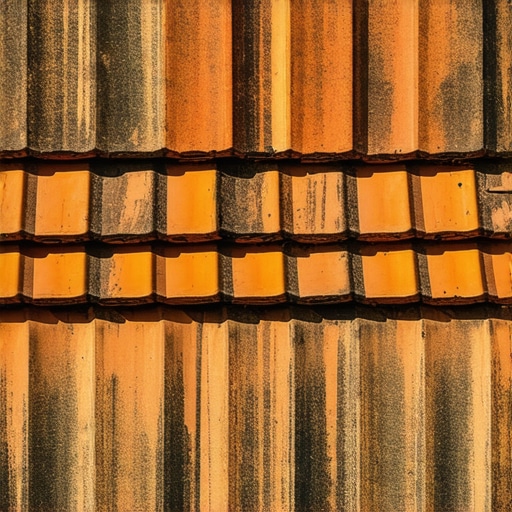
The Autopsy of a ‘Perfect’ Inspection
I was standing in a Great Room in Scottsdale last July. The homeowner was staring at a brown, concentric ring of water damage directly above a $15,000 Italian leather sofa. He was livid. ‘Three separate local roofers and a home inspector looked at this,’ he told me, pointing at the ceiling. ‘They all said the tiles were tight. No cracks. No slips. They told me I was crazy.’ I didn’t say a word. I just walked over to the wall, touched the drywall, and felt that unmistakable, spongy give. It smelled like stagnant pond water and failed promises.
Walking on that roof felt like walking on a sponge. I knew exactly what I’d find underneath. From the ground, a concrete tile roof looks like armor. It’s heavy, it’s expensive, and it’s perceived as permanent. But a tile roof isn’t actually a waterproof system; it’s a water-shedding system. The real roof is the underlayment hiding beneath those heavy clay or concrete plates. When I climbed my ladder and pulled three tiles back from the valley, the homeowner gasped. The ‘perfect’ valley was packed with two inches of decomposed granite, bird nests, and silt. The valley metal—the very thing supposed to carry water away—had been bypassed entirely by a slow-motion flood of mud.
The Physics of the Valley Failure: Why it Happens
In the Southwest, we deal with a specific brand of physics. We have extreme UV radiation that cooks underlayment until it’s as brittle as a potato chip, followed by monsoons that drop three inches of water in twenty minutes. Most inspections fail because they only look at the ‘top’ layer. They see the tiles are aligned and call it a day. But the hidden gap in tile roof valleys occurs at the intersection of the tile cut and the metal flashing. This is where the ‘Mechanism Zooming’ starts. Water doesn’t just flow down a valley; it creates a vortex. When that valley is choked with debris, the water experiences hydrostatic pressure. It hits a wall of silt, stops, and begins to travel sideways. This is called capillary action, and it’s how water climbs up and under your tiles, over the edge of the valley metal, and directly onto the organic felt paper that’s already been baked to death by the sun.
“Valleys shall be lined with metal or other approved materials… flashing shall be installed at wall and roof intersections, at gutters, and at changes in roof slope.” – International Residential Code (IRC) R905.3.7
The Mud-Balling Phenomenon
Local roofers who don’t specialize in tile often miss ‘mud-balling.’ This happens when dust from our desert winds settles into the head-lap of the tile. When the first rains hit, that dust turns into a paste. This paste clogs the small channels designed into the underside of the tile. Once those channels are blocked, the water has nowhere to go but backward. If your roofer didn’t install a proper flashing detail at the valley transition, you’re not just looking at a leak; you’re looking at a structural rot event. I’ve seen 2×4 battens that had turned into black mush because the valley metal was ‘shorted’—meaning it didn’t extend far enough under the tile to account for the volume of a heavy storm.
The Band-Aid vs. The Surgery
When you call out a ‘trunk slammer’ to fix a valley leak, they’ll usually bring a tube of cheap plastic roofing cement. They’ll slather it over the tiles and the valley metal, call it a ‘sealant,’ and take your check. This is a death sentence for your roof. That caulk will bake, crack, and trap even more water behind it. In the trade, we call that a ‘shiner’ of a repair—it looks like something was done, but it’s actually making the problem worse. True tile roof repair requires the ‘Surgery.’ This means pulling every tile in that valley, cleaning out the silt that has turned your roof into a garden, replacing the rotted underlayment with a high-temp ice and water shield, and re-setting the tiles with proper clearance.
“A roof system’s longevity is dictated not by the primary covering, but by the integrity of its most vulnerable transitions.” – National Roofing Contractors Association (NRCA)
The Warning Signs Your Inspector Missed
If you’re vetting local roofers for an inspection, ask them to check the ‘cricket’ behind your chimney and the ‘trough clearance’ in your valleys. If they don’t know those terms, send them packing. A real pro will look for ‘calcium tracking’—white, chalky lines on the underside of your fascia boards. That’s the ghost of water that has already bypassed your valley metal. If you see those white streaks, your underlayment is already failing, even if the ceiling isn’t dripping yet. Waiting for a drip is like waiting for your car engine to throw a rod before checking the oil. You can see 5 signs your tile roof needs repair before 2026 storms here to get ahead of the curve.
The Commercial Cross-Over
While residential tile is one beast, commercial roofing issues often stem from the same negligence. Whether it’s a TPO membrane on a flat deck or a tile-covered parapet, the failure is always at the transition. I’ve performed the simple TPO adhesion test on buildings where the valley transitions were just as neglected as any residential home. Water is patient. It will wait for the heat to expand your materials, creating a microscopic gap, and then it will strike. If you’re a building owner, don’t let a contractor tell you the roof is ‘fine’ just because they didn’t see a hole. Ask about the laps. Ask about the flashing. Ask why the valley isn’t clearing debris.
The Cost of Ignorance
The ‘hidden gap’ is really a gap in knowledge. Most homeowners think a roof is a static object. It’s not. It’s a machine that works every time it rains. If the machine is clogged with desert silt and poor flashing, it breaks. Fixing a valley properly might cost you a few thousand dollars today. Ignoring it until the plywood deck turns to oatmeal will cost you twenty thousand tomorrow. Don’t be the guy with the $15,000 sofa and a $2 bucket. Get a forensic inspection that actually looks beneath the tile. It’s the only way to ensure your ‘forever roof’ actually lasts more than a decade.