
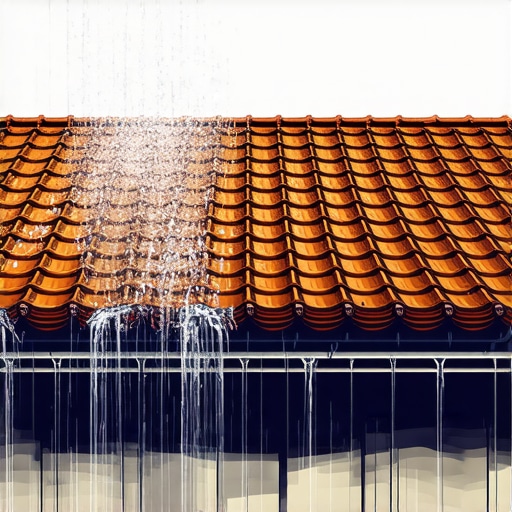
The Autopsy of a Mystery Leak
You wake up to the steady drip-drip-drip on your nightstand. It hasn’t even been a heavy storm, just a persistent desert drizzle. You look up at the ceiling and see a brown ring forming. You’re confused because you have a tile roof. Tile is supposed to last fifty years, right? That’s what the salesman told you. But here you are, looking for a bucket. Most local roofers will come out, swap a few cracked tiles, slop some mastic around a vent pipe, and charge you five hundred bucks. Three weeks later, it rains again, and that drip returns. Why? Because they didn’t look at the physics of the wall-to-roof transition. As a forensic investigator of failed structures, I can tell you exactly what’s happening: you’re a victim of the ‘Hidden Flashing Gap.’
My old foreman used to say,
‘Water is patient. It will wait for you to make a mistake.’
He was right. In places like Phoenix or Vegas, water doesn’t just fall; it searches. It uses capillary action to crawl sideways and surface tension to cling to the underside of your tiles. If your flashing isn’t integrated into the underlayment with surgical precision, that water is going to find its way into your attic every single time the sky turns gray.
The Physics of Failure: Why Tile is a ‘Liar’
First, let’s get one thing straight: a tile roof is not a waterproof system. It is a ‘water-shedding’ system. The concrete or clay tiles are just a heavy, expensive suit of armor designed to protect the underlayment from the brutal UV radiation of the Southwest. The real roof—the part that actually keeps your house dry—is the two layers of felt or synthetic membrane hiding beneath those tiles. When a tile roof leaks, the tile hasn’t failed; the flashing or the underlayment has. Specifically, we see a recurring disaster at the ‘headwall’—where the roof meets a vertical wall, like a second story or a chimney.
The Mechanism of the ‘Dead Valley’ Leak
Imagine the rain hitting your second-story stucco wall. Gravity pulls that water down. In a perfect world, it hits the metal flashing at the bottom of the wall and is diverted onto the top of the tiles. But in the real world of ‘trunk-slammer’ roofers, that metal flashing is often tucked behind the stucco but above the underlayment without a proper seal. This creates a tiny shelf. When the rain is light, water clings to the wall, slips behind the flashing flange, and drops directly onto the wood deck. Because the tile creates a micro-climate of shade and trapped moisture, that plywood never dries out. It turns to oatmeal. I’ve walked on roofs where the tile was the only thing holding the person up because the deck underneath had completely rotted away due to this single flashing error.
The Specific Flashing Error: Improper Counter-Flashing Integration
The biggest mistake I see in commercial roofing and high-end residential tile jobs is the lack of proper counter-flashing. The roofer installs the ‘L-metal,’ but they don’t integrate it with the building’s weather-resistive barrier (the house wrap or building paper). They rely on a bead of caulk to bridge the gap between the metal and the stucco. In the 140°F heat of a summer afternoon, that caulk dries out, shrinks, and cracks. Now you have a funnel. Every drop of water running down that wall is being directed under your roofing system. If you suspect this is happening, you might be tempted to climb up there yourself, but you should know there are 3 specific ways walking on your tile roof destroys the underlayment, turning a small flashing fix into a multi-thousand dollar disaster.
The Role of the ‘Kickout’ Flashing
Another common ‘shiner’—a trade term for a missed detail or a literal missed nail—is the absence of a kickout diverter. Where a roof edge meets a wall, the flashing must ‘kick out’ the water away from the wall and into the gutter. Without this, the water follows the corner of the wall down into the siding or, worse, into the soffit. This is why you see rotting fascia boards on five-year-old houses. The water is being channeled into the structure rather than over the edge. If you’re looking at a quote and it doesn’t specifically mention ‘kickout flashing’ or ‘custom lead transitions,’ you should be wary. Check out this guide on red flags in tile roof quotes to avoid being taken for a ride by a contractor who cuts corners on these ‘invisible’ details.
“A roof is only as good as its flashing.” – Old Roofer’s Adage
Thermal Expansion and the ‘Mastic Trap’
In our climate, materials move. A concrete tile can reach 160 degrees during the day and drop to 50 degrees at night. This thermal shock causes the metal flashing to expand and contract at a different rate than the tiles and the wood. When a lazy roofer uses ‘bull’ (roofing cement/mastic) to seal a transition instead of mechanical flashing, the mastic eventually pulls away. This creates a pocket that actually holds water against the underlayment. I call it the ‘Mastic Trap.’ It looks sealed from the ground, but it’s actually a reservoir. You need a pro who understands that the hidden flashing gap is often a result of ignoring these basic laws of thermal expansion. This is especially true on large TPO roofing projects or steep-slope tile transitions where the surface area for water collection is massive.
The Surgery: How to Fix it Right
A ‘Band-Aid’ fix is more caulk. ‘The Surgery’—the only way to stop the leak for good—involves removing three to four courses of tile around the affected area. We then strip the old, brittle felt and install a high-temp ice and water shield that laps up the wall. Only then do we install the new metal flashing, ensuring it is ‘counter-flashed’ by the wall cladding. This ensures that even if the primary seal fails, the physics of gravity keep the water on top of the system. This is the difference between a ‘repair’ and a ‘solution.’ If you’re tired of the constant cycle of leaks, it might be time to look for signs your tile roof needs repair before the next storm hits. Don’t wait until the ‘oatmeal’ stage to call in the experts.
How to Pick a Roofer Who Won’t Disappear
When the storm hits, the ‘storm chasers’ come out of the woodwork. They’ll offer you a cheap price and a ‘lifetime warranty’ that isn’t worth the paper it’s printed on because the company will be dissolved by next year. You need local roofers who have seen how these specific flashing errors manifest over decades, not just months. Ask them about ‘capillary breaks’ and ‘counter-flashing integration.’ If they look at you like you’re speaking a foreign language, show them the door. Your home is your biggest investment; don’t let a hundred-dollar flashing error lead to a fifty-thousand-dollar mold remediation project. Understanding the common DIY mistakes that ruin underlayment can also help you spot when a professional is—or isn’t—doing the job right. Stop the drip, fix the flashing, and let the rain stay where it belongs: outside.