
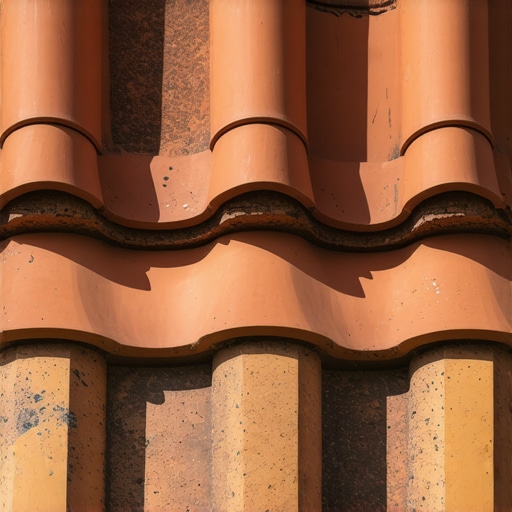
The Forensic Reality of the Tile Myth
That wet spot blooming on your ceiling in the middle of a Texas summer isn’t a suggestion; it’s a post-mortem report. Most homeowners and commercial property managers believe a tile roof is a permanent stone shield. They are wrong. In my 25 years of climbing these slopes, I have seen more ‘permanent’ roofs fail before their twentieth birthday than I care to count. Walking on a tile roof in the late August heat feels like walking on a sponge; you can literally feel the structural plywood yielding beneath the weight of the clay because the system has been compromised for years. I knew exactly what I’d find underneath: a graveyard of disintegrated felt and rusted fasteners.
Tile is not a waterproof barrier. It is a watershed. The real roof—the part that actually keeps your drywall dry—is the underlayment hiding beneath those heavy concrete or clay shells. In the Southwest, we deal with a specific kind of violence: thermal shock. When the temperature on the roof deck swings from 150°F at noon to 70°F after a sudden thunderstorm, the materials expand and contract at different rates. This ‘breathing’ eventually tears the underlayment apart. If you are seeing leaks now, you aren’t just dealing with a broken tile; you are dealing with a systemic failure of the water-shedding logic. Local roofers who just slap some mastic on a crack are doing you a disservice. You need surgery, not a band-aid.
“The roof covering is only the first line of defense; the integrity of the underlayment and flashing determines the lifespan of the structure.” – NRCA Roofing Manual
Fix 1: The Underlayment Resuscitation
The most common failure I see is ‘crispy’ underlayment. In our climate, the organic oils in standard 30-lb felt paper bake out over a decade. What’s left is a brittle, paper-thin layer that cracks the moment a tile shifts. When we perform a forensic strip-back, we often find the felt has turned to dust. The fix for 2026 isn’t more felt; it’s a high-temp modified bitumen or a synthetic self-adhering membrane. This material seals around the nail shafts, preventing ‘shiners’—those missed nails that act as direct conduits for water—from dripping into your attic. If your roofer isn’t talking about the ‘head-lap’—the overlap of the tiles—and how the underlayment handles hydrostatic pressure at the eaves, they are just a ‘trunk slammer’ looking for a quick check.
Fix 2: Clearing the Valley Dams
Valleys are the highways of your roof. They carry the highest volume of water. However, tile roofs are notorious for catching debris—oak leaves, pine needles, and bird nests—underneath the tiles in these valleys. This debris acts as a dam. Water hits the dam, backs up, and moves sideways. This is called capillary action. Because the water can’t flow down the metal valley, it seeks the path of least resistance: over the edge of the flashing and straight onto your decking. For commercial roofing, this is even more dangerous as the larger surface areas generate massive water velocity. You have to pull the ‘valley metal,’ clear the muck, and ensure the ‘cricket’—that small peaked structure behind chimneys—is actually diverting water and not just collecting it.
Fix 3: Eliminating the ‘Shiner’ and Mechanical Failure
Every time a ‘local roofer’ walks on your tiles without knowing the ‘sweet spot’ (the lower third where the tile overlaps the one below), they risk creating micro-fractures. A cracked tile is a literal funnel. But the real enemy is the ‘shiner.’ This is a nail that was driven into the rafter but missed, or one that has backed out due to the constant vibration of the house. In the desert heat, the wood shrinks, pushing the nail up. It lifts the tile just enough for wind-driven rain to get underneath. We replace these with stainless steel fasteners that won’t succumb to galvanic corrosion. If you’re managing a property with mixed materials, you might also be dealing with 7 TPO roofing mistakes that drain commercial budgets in 2026, especially where flat sections meet tile slopes. Those transitions are where 90% of the ‘unsolvable’ leaks live.
“Underlayment shall be applied in accordance with the manufacturer’s installation instructions… and shall be attached to the roof deck with approved fasteners.” – International Residential Code (IRC) R905.1.1
Fix 4: Flashings and the ‘Muck’ Trap
Flashings are the metal transitions around vents, walls, and chimneys. Most ‘discount’ roofers rely on ‘muck’—a thick roofing cement—to seal these areas. Muck is a temporary fix. Within two years in the sun, it shrinks, cracks, and pulls away. A forensic fix involves ‘step-flashing’ where each piece of metal is woven into the tile courses. We see this often in commercial roofing where HVAC units are involved. If the flashing isn’t counter-flashed—meaning tucked into a saw-cut in the brick or stucco—it will fail. There is no amount of caulk in the world that can replace proper metal geometry. Water is patient; it will find the one millimeter where your caulk has peeled and it will exploit it every time it rains.
Fix 5: Bird Stops and Eave Closures
This is the most overlooked maintenance item. The gaps at the end of your tile rows (the eaves) are an open invitation for pests. Birds and rodents love the 140°F heat of a tile roof. They bring in nesting material that holds moisture against the fascia board and the starter strip. This leads to rot that you won’t see until the gutter falls off. Installing ‘bird stops’—specially shaped inserts that block these gaps—is mandatory for long-term health. It prevents the ‘wicking’ effect where moisture is pulled from the wet nest into the wooden structural members of your home.
The Physics of the 2026 Roof
As we move into 2026, the intensity of storm cycles is increasing. We are seeing higher wind-uplift requirements. A tile roof that was ‘fine’ in 2010 might not meet the structural demands of today’s weather patterns. If you hear your tiles flapping during a storm, the ‘lugs’ (the hanging tabs on the back of the tiles) might be sheared off. This is a safety hazard and a leakage certainty. You need a forensic inspection that looks at the ‘head-lap’—the amount of tile that covers the one below. If it’s less than three inches, wind-driven rain will simply blow uphill and over the top of the tile. Don’t let a salesman tell you it’s just a ‘simple fix.’ If the bones of the system are rotten, you’re just throwing good money after bad. You have to respect the physics of water and the reality of the sun. Anything less is just a waiting game for the next disaster.
Comments are closed.