The Lie of the Forever Roof
You’ve seen the brochures. They show a beautiful villa in the desert with a clay roof that looks like it’s been there since the Roman Empire. The salesman tells you it’s a 50-year material. He’s technically not lying, but he’s omitting the most expensive truth in the roofing trade: while the tile might last 50 years, the system underneath it is dying every single day. Walking onto a tile roof in the Southwest is like walking on eggshells over a slow-motion furnace. My old foreman used to say, ‘Water is patient. It will wait for you to make a mistake.’ And in places like Phoenix or Vegas, water doesn’t just wait; it uses the heat to bake your roof until it’s brittle enough to shatter under a pigeon’s weight.
We are entering 2026, and the ‘Material Truth’ is that your tile roof is actually two separate roofs. There is the cosmetic shedding layer (the tile) and the actual waterproof barrier (the underlayment). Most homeowners ignore the latter until the ceiling starts looking like a watercolor painting. By then, you’re not looking at a repair; you’re looking at a full-scale forensic tear-off. If you want that 50-year lifespan, you have to stop treating your roof like a ‘set it and forget it’ appliance. You need to understand the physics of failure.
“A roof is only as good as its flashing.” – Old Roofer’s Adage
The Physics of the Crack: Why Your Tiles Are Splitting
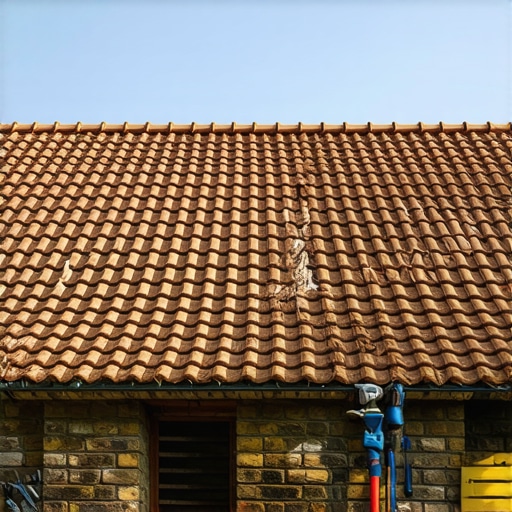
In the desert, the enemy isn’t just rain; it’s thermal shock. During a typical July day, your concrete or clay tiles soak up UV radiation until they hit 160°F. When a sudden monsoon hits, that temperature drops 70 degrees in minutes. This causes rapid contraction. If your local roofers didn’t leave enough of a gap at the valley or if they used too many shiners (missed nails that pin the tile too tightly), the material has nowhere to move. It cracks. This isn’t just a cosmetic issue. Through a process called pore suction, that hairline crack acts like a straw, pulling moisture deep into the tile body and eventually onto the wooden battens. Over time, those battens rot, the nails pull out, and you have a sliding tile situation that can crush a patio table—or a person.
Step 1: The Zero-Debris Protocol
Water doesn’t just fall off a roof; it flows. Or at least, it’s supposed to. When leaves, twigs, and desert dust accumulate in your valley or behind a cricket, they create a dam. This isn’t just a clog; it’s a hydraulic hazard. As water builds up behind this debris, it creates ‘hydraulic head pressure.’ This pressure forces water sideways, underneath the side-lap of the tile. Once the water is under the tile, it’s sitting directly on your 30-lb felt or synthetic underlayment. These materials are water-resistant, not waterproof. If you leave a wet pile of organic mush on your roof, it will eventually rot through. For a deeper dive into these risks, check out tile roof maintenance 5 fixes to stop leaks in 2026.
Step 2: The Underlayment ‘Sunburn’ Audit
In the Southwest, the underlayment is the weak link. Most commercial roofing standards suggest that even if the tile is perfect, the felt underneath will dry out and become brittle within 20 years. This is ‘Dried-out Felt’ syndrome. When tiles crack or slip, they expose this felt to direct UV rays. A single summer of exposure will turn your underlayment into something resembling burnt toast. You need to have a pro lift a few tiles in high-heat areas (like south-facing slopes) to check for elasticity. If it crumbles when touched, the tile is irrelevant—your roof is already dead. This is why tile roof repair 5 diy mistakes that ruin underlayment 2026 is required reading before you let a handyman up there with a tube of caulk.
Step 3: Flashing and Capillary Action Management
Most leaks happen where the roof meets a wall or a chimney. This is where roofers get lazy. They rely on mastic (black goo) instead of proper metal counter-flashing. Mastic dries out and cracks in three years. Proper flashing uses the principle of gravity to direct water. If you see ‘shiners’—nails driven through the flashing in the wrong spot—you have a direct path for water to enter your home via capillary action. Water can literally climb uphill if the gap is small enough and the surface tension is right. If your flashing isn’t integrated into the ‘wrinkle-free’ underlayment, you’re just waiting for a disaster. You might find that 5 signs your tile roof needs repair before 2026 storms helps you identify these flashing failures early.
Step 4: The Mortar and Bird Stop Defense
Tile roofs are hollow. This creates a perfect habitat for pigeons and rodents. Their droppings are highly acidic and will eat through underlayment faster than you’d believe. Furthermore, birds often pull out the ‘bird stops’—those little inserts at the eave—to gain access. Your maintenance routine must include checking the integrity of mortar at the ridge caps and the bird stops at the eaves. If the mortar is crumbling, it’s allowing wind-driven rain to get under the square and bypass your primary defenses.
“The National Roofing Contractors Association (NRCA) recommends that tile roof systems be inspected at least once a year to ensure that the water-shedding layer remains unobstructed and intact.”
Step 5: Professional Forensic Audits vs. The ‘Free’ Inspection
Don’t call a guy who just wants to sell you a new roof. Call someone who understands the forensic nature of rooofing. A real pro will look for ‘thermal bridging’ and signs of batten rot. They won’t just offer you a ‘Lifetime Warranty’—which, by the way, is usually marketing nonsense. Most ‘Lifetime’ warranties cover the material but not the labor or the underlayment, which are the things that actually fail. When vetting pros, be wary of low-ball offers. You should always ask is your 2026 tile roof quote too low 4 red flags to check to ensure you aren’t hiring a ‘trunk slammer’ who will disappear when the first leak appears.
Hiring Without Getting Burned
If you’re moving into a replacement phase, don’t just swap tile roof for TPO roofing because it’s cheaper for commercial buildings; stick to the material your structure was designed for. But make sure your local roofers are using stainless steel or double-hot-dipped galvanized nails to prevent galvanic corrosion. If they use cheap staples, your tiles will be sliding off the deck in a decade. Always check the contract for specific material grades. If you aren’t sure what to look for, see hiring local roofers 5 contract red flags to spot in 2026 to protect your investment. A tile roof is a legacy asset, but only if you respect the physics of the system.