
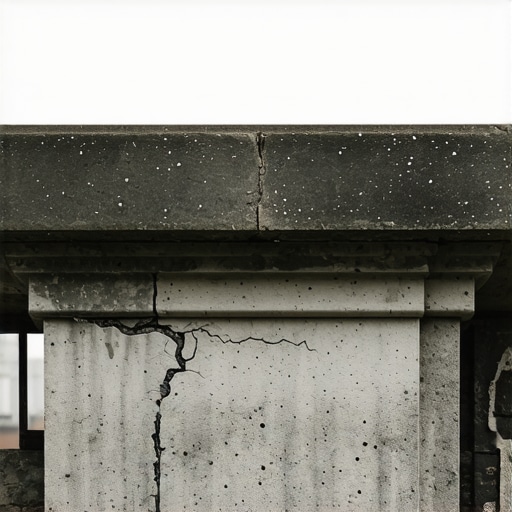
I was standing on a commercial roof in the middle of a July heatwave, the kind of heat that makes the white TPO membrane feel like it’s trying to blind you. The building owner was pacing, pointing at a water stain in his executive suite that had appeared after a mild monsoon rain. This roof was only four years old. On paper, it was a 60-mil Cadillac. But as I walked the perimeter, my boots didn’t hit solid deck; they hit a void. The membrane was ‘tenting’ at the parapet wall, pulled tight as a guitar string. I knew before I even pulled my probe what had happened. Someone skipped the most boring, tedious detail in the NRCA handbook.
The Physics of the TPO Tug-of-War
In our desert climate, your roof isn’t a static object. It is a living, breathing, stretching beast. During a typical 110-degree day, that TPO surface can hit 160 degrees. By 3:00 AM, it drops to 65. This thermal cycling creates a massive amount of tension. My old foreman, Salty Mike, used to sit on a bucket of bonding adhesive and tell me, ‘Water is patient. It will wait for you to make a mistake, then it will use physics to turn that mistake into a swimming pool in the lobby.’ Mike was right. When a TPO membrane isn’t properly ‘pinned’ at the base of a wall, it undergoes a phenomenon called ‘bridging’ or ‘tenting.’ This happens because TPO has a high coefficient of thermal expansion. It wants to shrink back toward the center of the roof. If the Peel Stop—the mechanical fastening at the transition where the flat deck meets the vertical wall—is missing or installed with ‘shiners’ (nails that missed the structural member), the membrane pulls away. It’s not a leak yet; it’s a structural failure of the assembly.
“Flashings shall be installed in such a manner so as to prevent moisture entering the wall and any part of the building through joints in the coping, through thin sections or hollow units of masonry, or through joints in the facing of the wall.” – International Building Code (IBC) Section 1503.2
The Forensic Breakdown: The Missing Mastic
The specific detail that local roofers almost always forget is the Water Cut-Off Mastic behind the termination bar. When we talk about the missing termination bar, we aren’t just talking about the piece of aluminum. We are talking about the critical seal behind it. I’ve seen hundreds of jobs where the roofer screwed the bar into the masonry but skipped the gray, gooey mastic that goes between the membrane and the wall. Without that mastic, capillary action pulls water upward, behind the flashing, and directly into the building’s parapet wall. It doesn’t matter how good your heat-welded seams are if the water can just walk around the back door. This is often the real reason your TPO roof membrane is shrinking early; the lack of compression at the edges allows the entire field to shift. Most commercial roofing costs don’t account for the labor required to properly prep a masonry surface for this detail, so crews skip it to stay on schedule.
Why TPO Isn’t Just ‘Plastic Paper’
People think TPO is just a sheet of plastic. It’s actually a complex laminate. When you zoom in on a failure, you see the ‘scrim’—the polyester reinforcement—starting to show through the top polymer layer. This is called ‘checking.’ In the Southwest, UV radiation accelerates this, but the stress of a poorly fastened parapet makes it ten times worse. If the roofer didn’t use a specific TPO corner detail or neglected the ‘cricket’ (the small diverter behind a chimney or curb), the water ponds. Ponding water on a TPO roof is a death sentence because the dirt and debris in that puddle act like a magnifying glass for the sun, cooking the membrane from the top down while the structural tension rips it from the bottom. I’ve found that hidden TPO roofing faults are rarely about the material and almost always about the guy holding the Leister heat-welder.
“A roof is only as good as its flashing, and the flashing is only as good as the substrate it is attached to.” – Old Roofer’s Adage
TPO vs. Tile: A Climate Comparison
While many of my residential clients ask about durable tile roof materials, the logic of the parapet applies there too. On a tile roof, the ‘valley’ is the weak point. On a commercial TPO roof, the wall is the valley. If you are looking at red flags in tile roof quotes, you’ll notice the cheap guys skip the flashing upgrades. It’s the same with TPO roofing price traps. If a quote is $5,000 lower than the rest, they are saving that money by not installing the ‘Peel Stop’ fasteners every 12 inches. They are betting that the roof will last past their one-year labor warranty. By the time the ‘tenting’ becomes a leak, they’ll have changed their company name. This is why hiring local roofers without getting ripped off requires you to ask for a photo of the base-of-wall attachment before the flashing is covered up.
The Forensic Autopsy: What to Look For
If you suspect your commercial roof is failing, don’t wait for the water to hit your desk. Go up there after a rain. Look at the parapet walls. Is the membrane tight? Does it look like a ‘cove’ instead of a sharp 90-degree angle? If so, your roof is pulling away. Check the ‘Termination Bar’ at the top of the wall. Is the caulk cracked? If you can slide a credit card behind that bar, you have a major problem. You are likely dealing with the specific TPO seam failure that most maintenance teams overlook because they are only looking at the flat parts of the roof. Remember, a ‘lifetime warranty’ from a manufacturer usually only covers the material. It doesn’t cover the ‘bridging’ caused by a roofer who didn’t know his physics. Before you sign a contract for a replacement, make sure you aren’t just buying another four-year headache. Demand to see the ‘Termination Detail’ in the blueprints. If the roofer looks at you like you have two heads, find another roofer.
“,”image”:{“imagePrompt”:”A close-up forensic photo of a white TPO roof membrane failing at a parapet wall, showing the membrane ‘tenting’ and pulling away from the base with visible gap between the wall and the flashing, harsh desert sunlight, high contrast, trade professional pointing at the lack of mechanical fasteners.”,”imageTitle”:”TPO Parapet Tenting Failure”,”imageAlt”:”Close-up of TPO roofing membrane pulling away from a parapet wall due to thermal expansion and missing fasteners.”},”categoryId”:1,”postTime”:”2025-05-20T10:00:00Z”}