
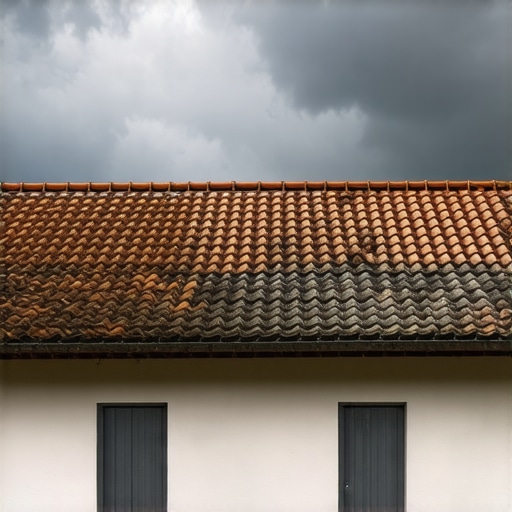
The Material Truth: Why Most 2026 Roofs Will Fail Before the Mortgage is Paid
You’re standing in a showroom, and some guy in a polo shirt is trying to sell you on a ‘lifetime warranty.’ I’ve heard it for twenty-five years. My old foreman, Pops, used to say, ‘Water is patient. It will wait for you to make a mistake.’ He was right. Most people pick a tile roof based on how it looks with their stucco, but they forget that a roof isn’t a decoration—it’s a thermal shield and a hydraulic barrier. If you’re in the Southwest, your roof is currently baking in 150-degree heat, and then you expect it to handle a 3-inch-per-hour monsoon downpour without a hiccup. Most can’t. By the time the 2026 storm season hits, the ‘trunk slammers’ will be long gone, and you’ll be left with a ceiling that looks like a map of the Mississippi.
When we talk about the physics of failure, we aren’t just talking about a cracked tile. We’re talking about thermal shock. In the desert, a tile can hit 160°F by 2 PM. Then a sudden thunderstorm hits, dropping the temperature by 40 degrees in minutes. The material contracts so fast it creates micro-fractures. Over time, these fractures allow capillary action to draw water upwards under the tile. Once moisture hits the underlayment, the real clock starts ticking. If your roofer used cheap #30 felt instead of a high-temp synthetic, that felt is already as brittle as a potato chip. One heavy wind, and that tile shifts, the nail tears the felt, and you’ve got a leak. If you want to avoid this, you need to know what you’re actually buying before you hire local roofers who might be cutting corners on the deck prep.
“The roof shall be covered with materials that are compatible with the environment and the slope of the roof deck to ensure shedding of water.” – International Residential Code (IRC) Section R903.1
1. High-Density Concrete S-Tiles: The Workhorse
Concrete tiles are the most common for a reason: they’re heavy and relatively cheap. But ‘heavy’ is a double-edged sword. A single square (that’s 100 square feet in trade talk) can weigh up to 1,100 pounds. If your rafters weren’t engineered for that, your ridge line is going to sag like an old horse’s back. For 2026, you want a high-density mix with a low absorption rate. Standard concrete is porous; it sucks up water like a sponge. In a storm, that weight doubles, putting immense pressure on your flashings. Look for tiles with a ‘slurry’ coat—a concentrated layer of pigment and cement that seals the surface against UV radiation and prevents the tile from becoming a moss garden.
2. Grade 1 Vitrified Clay: The Century Material
If you want a roof that will outlive you, go with vitrified clay. This isn’t just mud baked in a kiln. Grade 1 clay is fired at such high temperatures that it becomes almost glass-like. It has a water absorption rate of less than 6%, meaning it won’t swell and crack during the thermal cycles of a desert summer. The ‘Mechanism of Failure’ in clay usually isn’t the tile itself; it’s the ‘birdstop’ or the eave risers. Without a proper eave riser, the first row of tiles sits at the wrong angle, allowing wind-driven rain to blow right under the first lap. You need to verify that your tile roof maintenance includes checking these transition points annually.
3. Natural Slate: The 100-Year Rock
Slate is the king of materials, but it’s a nightmare for the inexperienced. It requires a specialist. I’ve seen dozens of slate roofs ruined because a roofer used galvanized nails instead of copper. In five years, the galvanized nails rust out—we call them ‘shiners’ when they miss the joist—and the slate just slides off the roof. For 2026, if you’re looking for storm resilience, slate has an incredible impact rating, but the ‘head-lap’ (the amount one slate overlaps the one below it) must be precise. If the pitch is low and the head-lap is thin, hydrostatic pressure will push water between the layers during a storm.
“Underlayment is the primary water barrier in a tile roofing system; the tile is merely the UV and impact shield.” – National Roofing Contractors Association (NRCA)
4. Synthetic Composite Tiles: The High-Impact Alternative
Modern chemistry has actually done something useful here. Synthetic tiles made from polymers and recycled materials are gaining traction because they have a Class 4 hail rating. They look like slate or shake but won’t shatter when a golf-ball-sized chunk of ice hits them at 80 mph. The catch? Expansion and contraction. These materials move more than stone. If the roofer pins them too tight, the roof will ‘oil can’ or buckle. It requires a specific fastening schedule. This is often where commercial roofing inspections find the most errors—incorrect fastening for the specific thermal zone.
5. Stone-Coated Steel: Lightweight Strength
Think of this as a metal roof wearing a tile costume. It’s perfect for reroofing over old shingles because it’s light. It handles high-wind ‘uplift’ better than almost anything because the panels interlock on all four sides. However, you need to watch out for the ‘valleys.’ A valley is where two roof slopes meet. In stone-coated steel, if the valley isn’t lined with a heavy-duty bituthene membrane, the debris (leaves, dust, bird nests) will trap moisture against the metal, leading to ‘crevice corrosion.’ Always ensure your energy costs are managed by choosing a ‘cool roof’ color that reflects infrared light.
6. Glazed Ceramic: The Coastal Defense
If you’re near the coast, salt air is your enemy. It eats standard concrete and metal for breakfast. Glazed ceramic provides a non-porous finish that salt can’t penetrate. The weakness here is the ‘cricket.’ If you have a chimney wider than 30 inches, you need a cricket—a small peaked structure—to divert water. Without it, water damming occurs, and no amount of glazing will save you when six inches of water is sitting against your flashing during a tropical depression.
7. Integrated Solar Tiles: The 2026 Tech
We’re seeing more ‘active’ roofs. These aren’t clunky panels bolted on top (which usually creates a dozen leak points); these are the tiles themselves. The risk? Heat. Electronics hate heat. If the roofer doesn’t understand the ‘stack effect’—where cool air enters at the eave and hot air exits at the ridge—the solar cells will degrade in three years. Proper ventilation is non-negotiable. Don’t let a contractor tell you that ‘ridge vents aren’t necessary’ with solar tiles; they are lying to save a day of labor.
The Final Inspection: Don’t Get Burned
Choosing the material is only 30% of the battle. The other 70% is the guy holding the nail gun. I’ve seen $50,000 clay tile roofs fail in three years because the installer didn’t use ‘stainless nails’ in a high-salt environment or skipped the ‘secondary water resistance’ layer. Before you sign a contract, ask about the ‘flashing details.’ If they say they’ll just ‘caulk it,’ walk away. Caulk is a temporary fix for a permanent problem. Real roofing is about metal-to-metal counter-flashing. When the 2026 storms roll in, you’ll be glad you didn’t hire the cheapest guy in the phone book. Check for reliable local roofers who can explain the physics of their system, not just the color options.
Comments are closed.