
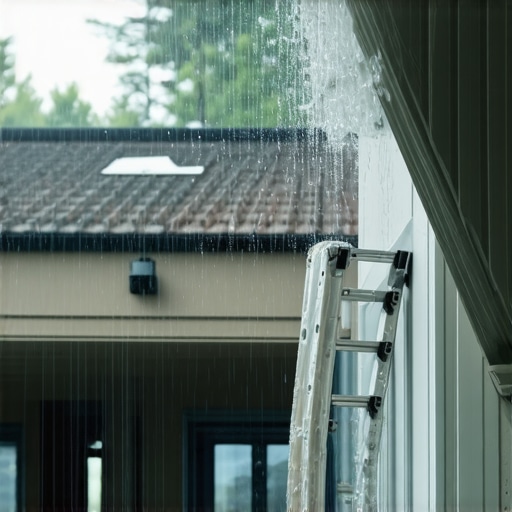
I’ve spent twenty-five years crawling across scorching 140-degree tile decks, and if there is one thing that makes my blood boil, it is the ‘fully insured’ lie. You see it plastered on the side of every beat-up white van from Phoenix to the Texas border: ‘General Liability and Workers Comp.’ They say it like it is a bulletproof vest for your bank account. It isn’t. Most homeowners assume that if the roofer botches the job, the insurance company will cut a check to fix the roof. That is a fantasy.
“A roof is only as good as its flashing.” – Old Roofer’s Adage
My old foreman, a man who could smell a leak through three layers of hot mop, used to pull me aside when I was just a grunt. ‘Water is patient, kid,’ he would say while pointing at a poorly integrated valley. ‘It will wait for you to make a mistake. It will wait years for a single shiner to rust out, then it will rot the whole deck while the homeowner is sleeping.’ He was right about the water, and he was right about the contractors who ignore the physics of it. When you are hiring local roofers, you aren’t just buying shingles or TPO; you are buying their ability to manage water. General Liability (GL) insurance is designed to cover third-party bodily injury and property damage. If a roofer drops a bundle of shingles through your skylight, GL covers the skylight. If they leave the roof open and a monsoon floods your living room, GL covers the carpet. But if the roofer simply does a bad job—if they miss the ‘cricket’ at the chimney or use the wrong ‘square’ count of underlayment—the insurance company will walk away. They consider poor workmanship a ‘contractual’ issue, not an ‘occurrence.’ This is why so many local roofers use scams to hide their lack of real coverage. In the Southwest, we face a specific enemy: UV Radiation and Thermal Shock. Our roofs aren’t just sitting there; they are breathing. During the day, that concrete tile or TPO membrane expands under the brutal sun. At night, as the temperature drops forty degrees, the material shrinks. This constant movement puts immense stress on the ‘fasteners’ and ‘seams.’ If your contractor skipped the ‘secondary water resistance’ layer to save a few bucks, that thermal expansion will eventually pull the underlayment apart. By the time you see a brown spot on your ceiling, the ‘plywood’ underneath has likely turned to the consistency of wet cardboard.
“The building envelope must be viewed as a continuous system, where any failure in the shedding layer inevitably leads to structural compromise.” – NRCA Manual Excerpt
Let’s talk about the ‘Mechanism of Failure’ in commercial roofing. If you are looking at TPO roofing, you are probably worried about energy bills. But the real danger is the ‘cold weld.’ If the roofer’s heat-welding robot isn’t calibrated to the exact ambient temperature and wind speed of the day, the seam might look fused, but it lacks a structural bond. I’ve seen hundred-foot runs of TPO peel back like a banana skin because of a ‘shiner’—a nail that missed the purlin and eventually backed out, puncturing the membrane from underneath. This is why you must know how to spot a roofer faking insurance. A ‘General Liability’ certificate is just a piece of paper; it doesn’t guarantee the roofer has an ‘errors and omissions’ rider or a ‘completed operations’ clause that actually covers their work after they pack up their ladders. If you find yourself in a situation where the roof repair bill is double what you expected, it is often because the initial ‘cheap’ guy wasn’t actually insured for his own mistakes. You end up paying the ‘forensic tax’—hiring someone like me to tear off the mess and do it right. For those with a tile roof, the physics are even more unforgiving. Tiles are ‘water shedding,’ not ‘waterproof.’ The real roof is the underlayment. In our climate, cheap organic felt dries out and becomes brittle within five years. We call it ‘potato-chipping.’ When the felt cracks, water travels via ‘capillary action’—it literally sucks itself upward and sideways under the tile, finding the smallest fastener hole to enter your attic. If your roofer’s insurance doesn’t cover ‘resultant damage from workmanship,’ you are on the hook for the whole thing. Stop looking for the lowest bid and start looking for the roofer who can explain the ‘flash point’ of their TPO adhesive or the ‘uplift rating’ of their tile ‘battens.’ Because when the storm hits, a certificate of insurance won’t keep your living room dry—only a properly flashed valley will.