
You hear it before you see it. That rhythmic tink, tink, tink against the acoustic ceiling tile in the manager’s office. By the time the brown water spot starts to spread like a bruise, the damage isn’t just on the surface; it is deep in the insulation. As a forensic investigator in the commercial roofing world for over two decades, I have seen this exact scenario play out from Miami to Houston. Walking on that roof felt like walking on a sponge. I knew exactly what I would find underneath before I even pulled my probe out. The TPO membrane looks fine from ten feet away, but the physics of heavy rain reveals the lies told by a rushed installation.
The Physics of Failure: Why Heavy Rain is the Ultimate Snitch
Most commercial roofing systems handle a light drizzle without breaking a sweat. But when a tropical downpour hits—the kind that drops three inches of water in an hour—your roof is no longer a shedding surface; it is a pressurized tank. If your local roofers skipped the vital water-block mastic under the drain flange, you are essentially running a sieve. When water accumulates around a drain, it creates hydrostatic head pressure. This pressure forces water sideways, seeking any microscopic gap between the TPO membrane and the cast iron drain bowl. Under normal conditions, gravity pulls water down the pipe. Under heavy rain, that water stacks up, and the pressure pushes it under the clamping ring if the seal is not perfect. If you are seeing water during the storm but it stops quickly after, is your commercial roof pooling? That is your first red flag.
“A roof is only as good as its flashing.” – Old Roofer’s Adage
Mechanism Zooming: The Clamping Ring and the Missing Mastic
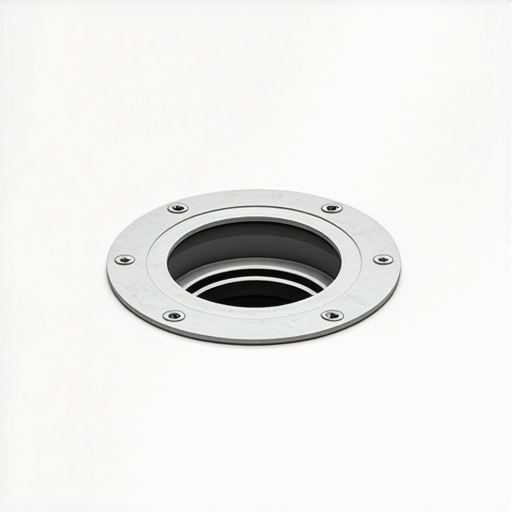
Let’s look deep into the anatomy of a drain. A proper commercial TPO setup requires the membrane to be laid over a bed of water-block mastic (a goopy, non-skinning butyl sealant) that sits on the drain flange. The clamping ring is then bolted down, sandwiching the TPO and mastic into a high-pressure seal. The error I see 90% of the time? The installer treats the clamping ring like a decorative piece rather than a mechanical seal. They forget the mastic, or worse, they use standard caulk. Caulk dries out and loses its elasticity. When that TPO membrane heats up to 150°F in the afternoon sun and then suddenly drops to 70°F during a rainstorm, it undergoes thermal shock. It shrinks. Without that flexible butyl water-block, the membrane pulls back just enough to break the seal. During the next deluge, the water-head rises above the ring, and capillary action sucks that moisture right into your polyiso insulation boards. This is why a simple drain check can save you fifty thousand dollars in deck replacement costs later.
The “Shiner” in the Sump: Why Tapered Insulation Matters
In the trade, we talk about “squares”—a 10×10 foot area. If your roof doesn’t have a proper “sump” (a lowered area around the drain created by tapered insulation), water will sit on the TPO seams near the drain. When water ponds, it puts constant stress on the heat welds. I’ve seen “trunk slammer” roofers install a drain flat against the deck without a sump. This forces the water to climb uphill to get into the drain. It’s a recipe for disaster. Furthermore, if they used the wrong fasteners and hit a structural member at an angle, you get a “shiner”—a missed nail or screw that eventually pokes through the membrane from the bottom up as the building vibrates. This is especially common when people hire residential guys to do commercial roofing. They don’t understand that TPO behaves differently than a tile roof or asphalt shingles. A drain screen installed upside down or a missing cricket to divert water is the difference between a 20-year roof and a 5-year nightmare.
The Warranty Trap: Why Your Paperwork Won’t Stop the Leak
Owners often tell me, “But I have a lifetime warranty!” I hate to be the one to break it to them, but most 2026 commercial roofing warranties are worthless if the failure is due to “improper maintenance” or “faulty installation of accessories.” Drains are often classified as plumbing accessories, not roofing. If the leak is at the clamping ring because the bolts weren’t torqued to the manufacturer’s spec (usually 20-foot-pounds), the manufacturer will deny the claim. They will blame the local roofers, and the roofers will have changed their company name by the time your deck starts to rot. I once tore off a roof where the plywood had turned to oatmeal because the installer didn’t use a stainless steel clamping ring, and the old cast iron one had rusted into pieces, allowing the TPO to flap like a flag in a hurricane.
“The assembly of the roof system shall be designed and installed to resist the wind loads and shall be weather-resistant.” – International Building Code (IBC) Section 1504.1
The Forensic Fix: Surgery vs. Band-Aids
If you have this leak, do not let anyone tell you that more caulk is the answer. Caulk is a Band-Aid for a bullet wound. The “surgery” involves removing the clamping ring, cleaning the old gunk off the flange with a splice cleaner, applying a fresh bead of heavy-duty water-block mastic, and potentially installing a target patch of new TPO if the old membrane is too scarred. While you are at it, check the cost of commercial roofing repairs to ensure you aren’t being overcharged for a two-hour job. If your roof is older, you might also be dealing with the specific TPO seam failure that happens when the polymers start to break down from UV exposure, making the membrane brittle and prone to cracking around the drain’s mechanical stress points.
How to Vet Your Next Roofer
Don’t just look at a five-star review from someone’s cousin. Ask the contractor for their TPO certification. Ask them what foot-pound torque they use on their drain rings. If they look at you like you have two heads, kick them off the ladder. A professional knows that a commercial roof is a system of physics, not just a pile of materials. Whether you are dealing with a tile roof on your home or a massive TPO deck on your warehouse, the principles of water management remain the same: water is patient, and it will find your mistakes. If you suspect your drains are failing, get an infrared moisture survey before the next heavy rain turns your warehouse into a swimming pool. The cost of a few bolts and some mastic is nothing compared to the hidden fees of a full structural failure.