
The Sound of a $50,000 Mistake
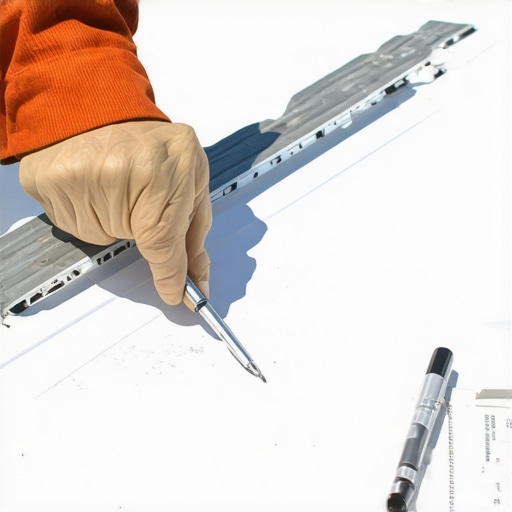
I remember standing on a 400-square warehouse roof in the middle of a November drizzle. The building owner was happy; the white TPO membrane looked like a fresh sheet of paper, blindingly bright and apparently tight. But as I walked the laps, something didn’t feel right. I pulled a rusted seam probe out of my back pocket—a tool most local roofers treat like a decorative ornament—and started dragging it along the edge of the weld. Pop. Pop. Slide. In a thirty-foot run, the probe sank into the seam three times. Those weren’t leaks yet, but they were ‘cold welds.’ To the naked eye, the roof was finished. To a forensic investigator, it was a ticking time bomb of saturation and mold.
If you are managing a commercial property, you are likely being told that TPO (Thermoplastic Polyolefin) is the ultimate solution. It’s reflective, it’s relatively cheap, and it’s fast to install. But that speed is exactly what kills the system. When an installer rushes the robotic welder or fails to account for a drop in voltage from a long extension cord, the membrane doesn’t actually fuse; it just ‘sticks’ momentarily. This is why you should never hand over that final check until you, or an independent third party, have physically challenged every single inch of those seams.
The Physics of the ‘False Bond’
To understand why probing is non-negotiable, you have to understand the molecular level of TPO roofing. Unlike EPDM, which relies on adhesive tapes, TPO is supposed to be heat-welded. A robotic welder crawls along the seam, blasting air at 800°F to 1,100°F between the two sheets. If the temperature is right and the speed is consistent, the two sheets become one. It is a monolithic piece of plastic. However, if the wind picks up or the ambient temperature drops, the welder might only melt the very top layer of the bottom sheet. This creates what we call a ‘false bond’ or a ‘cold weld.’
Water is a patient predator. It doesn’t need a wide-open hole; it uses capillary action. During a freeze-thaw cycle in northern climates, water gets into that microscopic gap of a weak weld. It freezes, expands, and like a slow-motion crowbar, it pries the seam apart. By the time you see a drip on your warehouse floor, your polyisocyanurate (ISO) insulation boards are likely already soaked, turning your high-efficiency roof into a heavy, sodden mess. This is why the specific TPO seam failure that most maintenance teams overlook is so devastating—it happens out of sight, beneath the white surface.
“The quality of a heat-welded seam is determined by the integration of the polymer chains across the interface. Visually, a cold weld may appear identical to a structural weld, making physical probing the only reliable field-test method.” – NRCA Manual excerpt
The Mentor’s Lesson: Water is Patient
My old foreman used to say, ‘Water is patient. It will wait for you to make a mistake, and it will wait years to let you know about it.’ He was right. I’ve seen commercial roofing projects where the contractor skipped the probe because they were ‘behind schedule.’ They figured the weight of the membrane and the initial stick would hold through the warranty period. But a roof isn’t just a cover; it’s a structural component. When you have a valley on a large flat roof, the hydrostatic pressure during a heavy downpour is immense. If that seam isn’t a true weld, that pressure will find the ‘shiner’—the missed spot—and the roofers who installed it will be long gone or operating under a different LLC by the time the deck rots.
The Anatomy of the Probe Test
So, what exactly are we looking for? A seam probe is a simple tool: a metal rod with a 90-degree hook and a dull point. You don’t want it sharp enough to slice the membrane, but strong enough to apply pressure. You run it along the ‘lap’—the edge where the two sheets overlap. If the weld is solid, the probe will simply glide along the plastic edge. If there is a void, the tip will hook into the gap. It is a binary test: it either holds or it fails. There is no ‘mostly welded.’
If you find a failure, don’t let the contractor just slap some caulk over it. That is a ‘Band-Aid’ on a surgical wound. The only real fix is to clean the area and re-weld a patch over the void. If you see a contractor hiding gaps with a bead of lap sealant, you are looking at the $500 flashing mistake that local roofers hide with caulk. It might pass a 10-minute visual inspection, but it won’t survive five years of thermal expansion.
The ‘Contractor’s Lie’ and the Voltage Trap
One of the most common reasons for TPO failure is something most owners never think about: electricity. Those robotic welders pull a massive amount of juice. If the local roofers are running 300 feet of thin-gauge extension cord to a generator that’s sputtering, the voltage drops. When the voltage drops, the heat element in the welder fluctuates. The machine might say it’s at 1,000 degrees, but the actual air hitting the membrane is only 700. This results in a ‘skipping’ weld—six inches of good bond followed by two inches of nothing. A probe is the only way to find these skips. If your roofer claims they ‘don’t need to probe because the machine is automatic,’ they are lying to you. Even the best robots need a human following behind with a probe to verify the work.
Why Most Warranties Won’t Save You
Building owners often think a ‘Lifetime’ or ’20-year’ warranty is their safety net. It’s not. Most TPO warranties are ‘Material Only’ or have so many exclusions for ‘workmanship’ that they aren’t worth the paper they’re printed on. If the seam pops because it was a cold weld, the manufacturer will blame the installer. The installer will blame the building’s ‘settlement’ or ‘unusual weather.’ You’ll be stuck in a legal loop while your inventory gets ruined. This is why why most 2026 commercial roofing warranties are worthless if you don’t have documented proof of a passing seam test at the time of install.
“A roof is only as good as its flashing and its seams. One square inch of failure can compromise ten thousand square feet of structure.” – Old Roofer’s Adage
The Cost of the Surgery vs. The Cost of the Probe
Let’s talk numbers. Probing a 10,000-square-foot roof might take a technician four to six hours. It is tedious, back-breaking work. But comparing that to the cost of a ‘surgery’—where we have to tear off the TPO, replace the wet insulation, and install new membrane—is a no-brainer. In the commercial world, 7 commercial roofing costs that will surprise you in 2026 often stem from ‘secondary damage.’ It’s not just the roof; it’s the electrical conduits, the HVAC units, and the downtime for your business. Spending a few hundred dollars on a forensic probe test before the final payment is the cheapest insurance policy you will ever buy.
A Warning About Tile Roof Transitions
If your commercial building has decorative tile roof sections or parapets, pay extra attention to the transitions. TPO is notorious for pulling away from vertical surfaces—a phenomenon called ‘bridging’ or ‘tenting.’ If the roofers didn’t use a termination bar or didn’t properly weld the flashing to the field membrane, water will find a way in. I’ve seen countless tile roof repairs where the leak wasn’t the tile at all; it was the TPO flashing tucked underneath it that wasn’t actually welded. If you suspect your installer cut corners, you should check for the quick chalk test that proves your TPO installer missed a weld before the first big storm hits.
The Final Verdict
Don’t be the ‘easy’ customer. The best local roofers actually appreciate an owner who knows what they’re looking at because it justifies their higher price for doing it right. The ‘trunk slammers’ and ‘storm chasers’ will hate it. They want to get the membrane down, get the check, and disappear before the first freeze. When that probe sinks into a seam, you’ve just saved yourself ten years of headaches. If they refuse to probe in your presence, show them the door. Your building deserves better than a ‘mostly’ waterproof lid.