
The Day the Roof Decided to Leave
Walking onto that commercial deck felt like walking on a giant, sun-bleached waterbed. The TPO membrane wasn’t bonded; it was hovering. I knew exactly what I’d find before I even pulled my probe out. In the Southeast, where the humidity sticks to your skin like a wet rag and the wind gusts off the coast with a personal vendetta, a TPO roof is a feat of engineering—or a catastrophic failure waiting for a 40-mph breeze. This particular project was a disaster. The membrane had billowed up three feet in the center, straining against the parapet walls like a trapped animal. It’s a classic forensic scene: the result of a contractor who thought ‘standard’ spacing was a suggestion rather than a law of physics.
The Physics of the Blow-Off: Why It Happens
Most local roofers understand the basics of a TPO roofing system, but few respect the fluid dynamics at play. When wind hits the side of a building, it accelerates as it goes over the edge. This creates a low-pressure zone on top of the roof—essentially turning the entire commercial roofing surface into an airplane wing. If the air pressure inside the building is higher than the pressure outside (which it usually is during a storm), that air tries to escape. It pushes against the underside of the membrane. If your fasteners aren’t spaced to fight that uplift, the membrane ‘flutters.’ This isn’t a gentle wave; it’s a high-frequency vibration that causes the fastener heads to saw through the polyester scrim of the TPO. This is why 7 tpo roofing mistakes that drain commercial budgets in 2026 often start with simple fastener patterns.
“The wind uplift resistance of a mechanically attached membrane is primarily dependent on the density and placement of the fasteners in the perimeter and corner zones.” – NRCA Manual
The 6-Inch Error: The Math of Failure
In the world of roofer shortcuts, the ‘6-inch error’ is king. In the ‘Field’ of the roof (the center), you might get away with wider spacing. But as you move toward the ‘Perimeter’ and ‘Corners,’ the wind loads triple. The error occurs when an installer uses 12-inch or even 10-inch on-center spacing in zones that require 6-inch spacing. This isn’t just about using fewer screws; it’s about the ‘tributary area’ of each fastener. When you double the spacing, you quadruple the stress on each individual point. I’ve seen TPO roofing projects where the local roofers missed the ‘shiners’—those fasteners that missed the purlin entirely—leaving the membrane held down by nothing but hope and a few scraps of heat-welded seam. If you suspect your installer cut corners, you can perform the simple tpo adhesion test that proves your roofer cut corners to see if the bond is actually holding.
Mechanism Zooming: The Pull-Through Failure
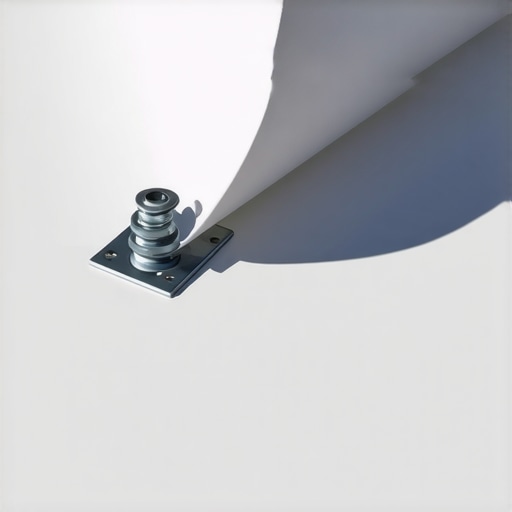
Let’s look at the microscopic level. TPO is reinforced with a scrim—a mesh of fibers. When a commercial roofing membrane isn’t pinned tightly at 6-inch intervals in high-wind zones, the membrane stretches. This stretching opens the molecular structure of the TPO around the fastener plate. Once the hole is wider than the plate, the membrane zips off like a jacket. It’s a chain reaction. One fastener fails, the load is transferred to the next, which is already overstressed, and within seconds, you have a 100-square membrane sitting in the neighbor’s parking lot. This is especially common when the specific tpo seam failure that most maintenance teams overlook is combined with poor fastener density.
Why Caulk and Patches Won’t Save You
I see it every week: a building owner tries to fix a ‘puffy’ roof with a bucket of mastic or a few TPO roofing patches. It’s like putting a Band-Aid on a compound fracture. If the membrane has already begun to lift, the fasteners have likely already ‘hogged out’ the holes in the scrim. At that point, the structural integrity of the sheet is gone. You aren’t looking at a repair; you’re looking at a surgical replacement of the perimeter sheets. Roofers who tell you otherwise are just trying to get past the warranty period before the whole thing vanishes in a summer squall. Many owners find out too late that why most 2026 tpo roof patches fail within 6 months is due to the underlying mechanical stress that hasn’t been addressed.
“Fasteners must be engaged into the structural deck to the minimum depth specified by the manufacturer to achieve rated pull-out resistance.” – International Building Code (IBC)
The Forensic Fix: Beyond the 6-Inch Mark
To fix a blow-off risk, you don’t just add more screws. You have to evaluate the deck. Is it 22-gauge steel? Is it structural concrete? In some cases, the local roofers used the wrong fastener type entirely, leading to galvanic corrosion in the salt air of the Southeast. We often have to install ‘wind rows’—additional lines of fasteners covered by a cover strip—to break up the large spans of membrane. This reduces the ‘bellows effect’ and keeps the roof where it belongs. If you are dealing with a tile roof on a different part of the building, the physics change, but the negligence is usually the same—missing valleys and poor flashing. But for TPO, the fastener is the heart of the system. Without the correct density, you’re just renting your roof from the next hurricane.