
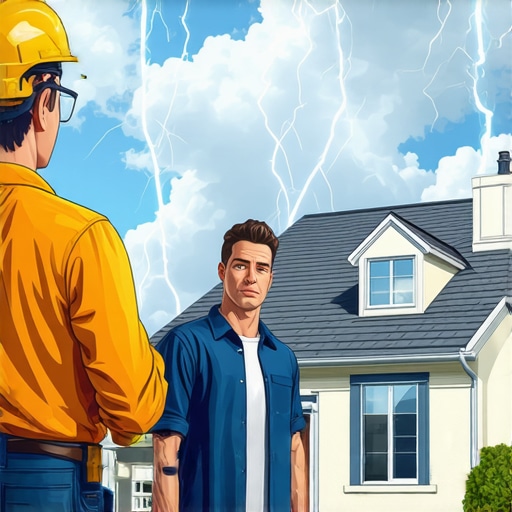
The Forensic Reality of the Desert Roof
Walking on that roof felt like walking on a sponge. I knew exactly what I’d find underneath before I even pulled a single tool out of my belt. It was a 115-degree afternoon in the height of the monsoon season, and the homeowner was convinced they just needed a few tiles replaced. But the crunch under my boots told a different story. The plywood deck wasn’t just wet; it was structurally compromised, decaying into a soft mulch because some trunk-slammer five years ago thought they could skip the proper underlayment to save a few bucks on a bid. This is the reality of the roofing industry in 2026. As a forensic investigator who has spent three decades on the deck, I’ve seen every trick in the book. You aren’t just paying for tile roof materials; you are paying for the physics of protection. When that fails, it’s rarely an accident. It’s usually a calculated scam designed to pad a contractor’s pocket while leaving your home vulnerable to thermal shock and UV degradation.
“A roof is only as good as its flashing.” – Old Roofer’s Adage
Scam 1: The Underlayment Shell Game
In our desert climate, the tiles aren’t actually your primary water barrier; they are a UV shield. The real heavy lifting is done by the felt or synthetic underlayment underneath. A common scam among local roofers is to quote a high-end tile roof but install the cheapest, #15 organic felt that cracks after three summers of thermal expansion. They know you won’t climb up there to check. By the time the underlayment fails and the leaks start, that contractor is long gone, or worse, they’ll charge you for a full tear-off to fix their own intentional mistake. Always insist on seeing the rolls of high-temp self-adhering modified bitumen before they go down. If they balk, you’re being played.
Scam 2: TPO Thickness Deception
For commercial roofing, TPO roofing is the king of the desert because of its reflective properties. But here is where the ‘mil-thickness’ scam comes in. A contractor will bid for a 60-mil or 80-mil membrane but install a 45-mil product. To the untrained eye, it looks the same. However, the service life difference is a decade or more. They pocket the difference in material cost, while your building absorbs more heat and the membrane wears through at the fasteners. This is one of the many 7 TPO roofing mistakes that drain commercial budgets in 2026. Without a micrometer and a sample cut, most owners never know they’ve been fleeced until the ponding water starts eating through the seams.
Scam 3: The “Square” Inflation Trick
Roofing is measured in ‘squares’—a 10′ by 10’ area. A frequent overcharge involves inflating the waste factor. While 10-15% waste is normal for complex hips and valleys, I’ve seen roofers charge for 25-30% waste on a simple gable roof. They are essentially charging you for thousands of dollars in material that never arrives at the job site. They count on the fact that you haven’t measured your own roof. This is why finding reliable local roofers requires seeing an itemized breakdown of actual roof area versus purchased squares. If those numbers don’t align with a basic satellite measurement, you are being overcharged.
Scam 4: The Flashing and Cricket Omission
Water is patient. It will wait for you to make a mistake. One of the most common ways local roofers shave costs is by reusing old flashing or ‘forgetting’ to install a cricket behind a large chimney. A cricket is a small peaked structure designed to divert water around an obstacle. Without it, water pools, creates hydrostatic pressure, and eventually finds a shiner—a nail that missed the rafter—to follow into your attic. They will charge you for ‘full system replacement’ but leave the rusted, 20-year-old lead jacks and valley metal in place, slapping a bit of cheap caulk over it that will bake and peel in the sun within months.
Scam 5: The “Lifetime” Warranty Mirage
Every salesman in 2026 wants to talk about a lifetime warranty. It sounds great until you read the fine print. Most of these are pro-rated, meaning they lose value every year, or they only cover ‘manufacturer defects’ which are nearly impossible to prove. They don’t cover the labor to replace the failed material, which is 70% of the cost. If you want to know the truth, why most 2026 commercial roofing warranties are worthless boils down to the fact that they exclude damage from ‘thermal shock’—the very thing that kills roofs in the Southwest. A warranty is only as strong as the company behind it, and many of these outfits close and reopen under new names every few years to dodge liability.
“The NRCA recommends that roof systems be inspected at least twice a year… to detect minor problems before they become major leaks.” – National Roofing Contractors Association
Scam 6: The Subcontractor Bait-and-Switch
You meet a polished salesman, see their high-end truck, and check their five-star reviews. But when the work starts, a crew shows up in an unmarked van with no ties to the original company. These are 1099 laborers paid by the square, incentivized to move as fast as possible, not as carefully as possible. This speed leads to ‘over-driven’ nails that cut through the shingle or ‘under-driven’ nails that create humps. This lack of oversight is why online reviews lie in 2026; the person who wrote the review didn’t have the same crew you do. If the guy who sold the job isn’t the guy supervising the job, the quality will suffer, but the price you pay stays at a premium level.
Physics of the Southwest: Why Quality Materials Matter
In regions with high UV and extreme heat, material science is your only defense. For instance, when choosing 7 durable tile roof materials, you have to consider the expansion coefficient. Concrete tiles expand and contract significantly between 140°F day temps and 60°F nights. Cheap fasteners will shear off under this stress. A forensic inspection often reveals that ‘leaks’ are actually caused by the roof literally tearing itself apart because the contractor used galvanized nails instead of stainless steel or copper in high-salt or high-heat environments. Capillary action can also pull water uphill under a tile if the bird-stop isn’t installed correctly at the eaves, leading to rotten fascia boards that were never in the original ‘budget’ estimate.
How to Protect Your Investment
Stop looking for the cheapest bid. The cheapest bid is almost always a guarantee of one of these six scams. Instead, look for a forensic-minded approach. Ask about the ventilation system. A hot attic will bake a tile roof from the inside out, causing the oils in the underlayment to migrate and leave the material brittle. If a contractor isn’t talking about R-value and intake/exhaust ratios, they aren’t roofing—they’re just slapping materials down. You need a professional who understands that the roof is a system, not just a surface. Demand photos of every stage: the bare deck, the dried-in underlayment, the flashing details, and the final product. If they refuse to provide photographic evidence of the work you can’t see, they are hiding something. In 2026, the only way to ensure you aren’t overcharged is to be more informed than the person holding the hammer.
Comments are closed.