
The Anatomy of a Hidden Failure
Last Tuesday, I stood in a living room in Houston where the ceiling looked like a topographical map of the Everglades. The homeowner was baffled. ‘The roof is only three years old,’ he told me, pointing at the brownish-black bloom of mold spreading across his crown molding. He’d called three different local roofers, and they all told him the same thing: ‘It’s probably just a popped nail.’ They were wrong. It wasn’t a nail. It was a missing piece of metal that costs about ten bucks for a ten-foot stick. The drip edge. This is the forensic reality of the roofing industry today—contractors cutting corners on the stuff you can’t see from the curb, leaving your home’s skeletal structure to rot in the Southeast humidity.
The Forensic Scene: Walking on Sponges
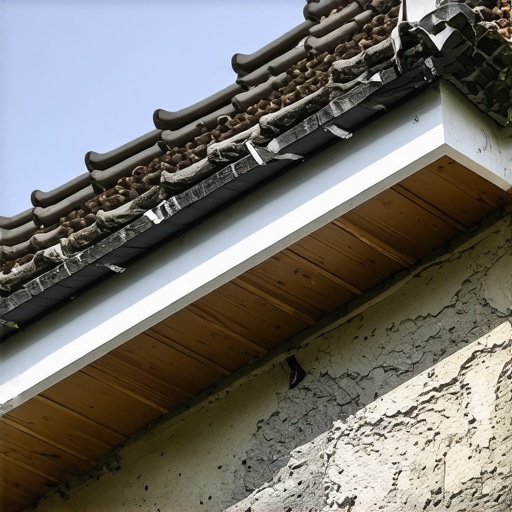
Walking on that roof felt like walking on a sponge. I knew exactly what I’d find underneath before I even pulled my pry bar out. When a roof deck feels ‘springy’ under a size 12 work boot, the plywood has already lost its structural integrity. In this case, the previous crew had installed high-end architectural shingles but completely omitted the drip edge flashing along the eaves and rakes. Without that metal ‘L’ to kick the water into the gutter, every afternoon thunderstorm was an invitation for water to climb backward. I pulled back a handful of shingle scraps and saw it: the fascia board was so saturated you could stick a screwdriver through it with two fingers. The ‘oatmeal’ effect had begun, and it wasn’t just the wood—the insulation was a sodden, heavy mess that was actively breeding spores.
“A roof is only as good as its flashing. Without proper water shedding at the perimeter, the entire assembly is compromised from day one.” – Old Roofer’s Adage
The Physics of Failure: Why Water Climbs Uphill
Most homeowners think gravity is the only force at play. They think water hits a shingle and falls down. If only it were that simple. In our tropical climate, we deal with capillary action and surface tension. When water runs off the edge of a shingle that doesn’t have a metal drip edge, it doesn’t just drop into the gutter. It clings. It follows the curve of the shingle edge and moves backward, wicking into the gap between the roof deck and the fascia board. This is ‘Mechanism Zooming’ at its worst. Once that water touches the raw edge of your 7/16-inch OSB or plywood, it acts like a straw. It sucks the moisture deep into the wood fibers, causing them to swell, delaminate, and eventually turn into a fungal playground. If you’ve found water spots near your exterior walls, the culprit isn’t usually a hole in the roof; it’s a failure of the edge metal.
The ‘Trunk Slammer’ Trap: Why They Skip It
Why do roofers skip this? It’s not just the cost of the material. It’s the time. Installing a proper drip edge requires a square-thinking mind. You have to install it over the underlayment at the rakes but under the underlayment at the eaves. It requires precise cutting and overlapping to ensure that water never finds an entry point. Many ‘storm chasers’ or low-bid local crews are looking to blow through three squares an hour. They see the drip edge as a nuisance that slows down the nail gun. They figure that by the time the fascia rots out in five years, they’ll be long gone, or their shell company will be dissolved. This is exactly why your roof repair bill is double what the initial quote claimed when you finally have to fix the structural damage they ignored.
The Structural Ripple Effect
When the fascia rots, it’s not just a cosmetic issue. The fascia is what holds your gutters. As the wood softens, the gutter spikes or brackets begin to pull out. Now, your gutters are sagging, which changes the pitch. Instead of water flowing to the downspouts, it pools. This creates a heavy, stagnant trough of water that puts even more stress on the rotting wood. Eventually, the whole system pulls away, exposing the rafter tails to the elements. This is a residential roofing service nightmare. Fixing a rafter tail involves ‘sistering’ new lumber onto the old, which means opening up the soffits and potentially the roof deck. It is surgery on your home that could have been avoided with a simple piece of galvanized steel or aluminum.
“Drip edges shall be provided at eaves and gables of asphalt shingle roofs. Adjacent segments of drip edge shall be overlapped not less than 2 inches (51 mm).” – IRC Building Code R905.2.8.5
Commercial Roofing and the TPO Component
The problem isn’t limited to residential shingles. In the world of commercial roofing, especially with TPO roofing, the edge detail is even more vital. TPO membranes are notorious for shrinking over time. If the perimeter isn’t fastened with a heavy-duty ‘drip edge’ or ‘termination bar’ that is properly heat-welded, the membrane pulls back like a cheap tarp in the sun. I’ve seen TPO roofing projects where the lack of a secure edge led to the wind catching the membrane and peeling it back like a sardine can during a minor tropical depression. Whether it’s a tile roof or a flat TPO deck, the edge is the most vulnerable point of the entire system.
How to Spot a ‘Shiner’ and Other Red Flags
If you’re hiring roofers today, you need to be a forensic investigator. Look at their past work. Do you see a metal flange peeking out from under the shingles at the gutter line? If you see shingles hanging two inches over the wood with nothing but air beneath them, run. That shingle will eventually curl, crack, and fail. Also, watch out for the ‘shiner’—that’s trade talk for a nail that missed the rafter and is sticking through the roof deck into the attic space. A roofer who skips the drip edge is the same kind of roofer who leaves a hundred shiners in your attic. Before signing anything, perform license checks and ensure their contract specifically lists ‘Installation of new 26-gauge drip edge on all eaves and rakes.’ If it’s not in writing, it’s not going on your house.
The Surgery: How We Fix It Right
If you’ve already got rot, a ‘shingle reset’ won’t save you. The surgery involves removing the bottom two rows of shingles, cutting out the soft plywood, and replacing the fascia boards. Only then can we install the drip edge and integrate it with a high-temp ice and water shield—even here in the South, that extra layer of protection against wind-driven rain is one of those residential roofing services you can’t skip. We ensure the metal has a ‘hemmed edge’ to provide a clean break for water to drip straight down, clear of the wood. It’s the difference between a roof that lasts 30 years and a roof that costs you a fortune in 2026. Don’t let a contractor tell you it’s ‘optional.’ In the eyes of physics and the building code, it’s the most vital piece of metal on your home.