
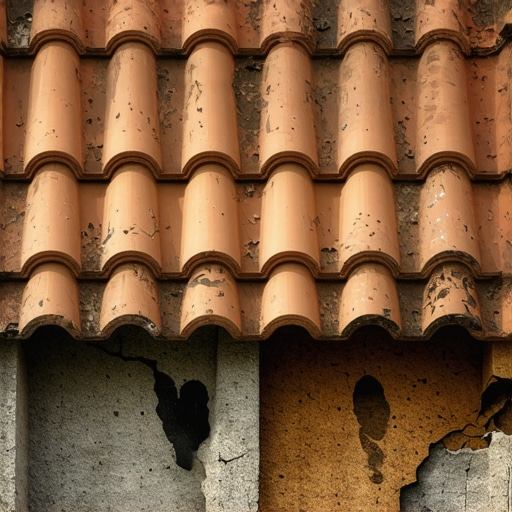
I was standing on a rooftop in Henderson last July, the kind of day where the air feels like it’s being pushed out of a hairdryer and the concrete tiles are radiating enough heat to cook a steak. I took one step—just one—and heard that distinct, dry crackle. It wasn’t the tile. It was the sound of thirty-year-old organic felt underlayment shattering like a pane of glass beneath the deck. Walking on that roof felt like walking on a sponge in some spots and a bag of potato chips in others. I knew exactly what I’d find underneath: a secondary water barrier that had been pulverized into black dust. Most homeowners think their tile roof is a solid shield. It isn’t. Those tiles are just sun-shades. Your real roof is a thin layer of asphalt-saturated material hidden in the dark, and every time an untrained foot hits those tiles, that layer is screaming. If you aren’t careful, you’re inviting a disaster that even the best local roofers will struggle to patch without a full tear-off.
The Illusion of the Hard Shell: Why Tiles Fail Upward
The biggest lie in residential and commercial roofing is that tile is a ‘lifetime’ product. Sure, the clay or concrete might last fifty years, but the underlayment—the stuff that actually keeps the rain out of your kitchen—is lucky to see twenty in the desert heat. When you walk on a tile roof, you aren’t just risking a cracked tile; you are engaging in a high-pressure mechanical assault on a brittle membrane. In the forensic roofing world, we see the results of this every day: perfectly good-looking tiles hiding a Swiss-cheese underlayment. Unlike TPO roofing, which is designed to be walked on for maintenance, tile systems are delicate ecosystems of weight distribution and airflow.
“Underlayment is the primary weather-protective component of a steep-slope roof system, particularly with tile, where the outer cladding is not water-tight.” – NRCA (National Roofing Contractors Association)
1. The Mechanical Shear: The ‘Knife-Edge’ Effect
The first way you’re destroying your roof is through mechanical shear. Imagine your tile is a lever. Most tiles are held up by wooden battens or are lug-hung. When you step on the center or the bottom edge of a tile, you are applying two hundred pounds of concentrated force onto a very small surface area. This force is transferred through the tile’s ‘lugs’ or the sharp bottom edge directly into the underlayment. In our climate, that underlayment is often ‘baked’—the oils have evaporated, leaving behind a brittle mat. When that pressure hits, the tile edge acts like a dull knife, slicing through the felt. You won’t see the leak today. But the next time a monsoon hits, water will travel under the tile, find that slit, and use capillary action to pull itself right into your plywood decking. This is why many tile roof repair diy mistakes end up costing thousands more than a simple service call.
2. Granule Scuffing and the Death of UV Protection
If you have a higher-end modified bitumen underlayment, it’s likely surfaced with small mineral granules. These granules aren’t just for looks; they are there to protect the asphalt from UV radiation and physical abrasion. When you walk across the roof, the tiles shift. It’s unavoidable. This shifting creates a grinding motion between the underside of the tile (which is as abrasive as 40-grit sandpaper) and the underlayment. You are literally sanding away the waterproof layer. I’ve peeled back tiles and seen ‘bald spots’ where the underlayment is thin as tissue paper because someone—usually a ‘trunk-slammer’ roofer or a cable guy—spent too much time pacing around. Once that asphalt is exposed, thermal shock takes over. The underlayment expands and contracts as the temperature swings from 140°F in the afternoon to 60°F at night. Without granules to buffer that heat, the material develops micro-fissures, leading to the same result: a saturated ceiling and a massive bill.
3. The ‘Shiner’ and Point-Load Penetration
The third mechanism of failure involves the fasteners. Every tile roof is riddled with nails—some holding the battens, some holding the tiles themselves. Over time, ‘thermal bowing’ causes these nails to slightly back out of the wood. We call these ‘shiners’ when they miss the rafter, but even a well-set nail can become a point-load hazard. When you walk on the roof, you might be stepping directly over a nail head that has slightly lifted. Your weight forces the tile down onto that nail head, which then punches a clean, round hole through the underlayment. It’s like a slow-motion hole puncher. You can’t see it from the ground, and you can’t see it from the top of the tile. But underneath, the water is already starting to rot the ‘cricket’ or the valley flashing. Before you know it, you’re looking at why your roof repair bill is double what you expected.
The Anatomy of a ‘Walking Path’ Leak
I once investigated a leak in a commercial complex where the maintenance crew had been walking the same path to service HVAC units for five years. From the surface, the tiles looked fine—maybe a little dusty, but no cracks. When we did a forensic tear-off of that specific section, the plywood was black. Not just wet—rotten. The constant foot traffic had compressed the underlayment against the deck seams, causing ‘bridging’ failures. Because the roofer who installed it didn’t use walkways or reinforced pads, the simple act of walking had turned a 50-year roof into a 10-year liability. This is why I always tell people: if you don’t have to be up there, stay off. And if you do hire someone, make sure they aren’t ‘walking the valleys’—the most sensitive part of the water management system.
“A roof is only as good as its flashing and its underlayment; the rest is just decoration.” – Old Roofer’s Adage
How to Avoid the $20,000 Mistake
If you suspect damage or need an inspection, don’t just call any roofers. You need someone who understands the ’tile-bridge’ technique—walking where the tile is supported by the batten and the overlap to minimize deflection. If you’re getting quotes for a replacement, look for red flags in tile roof quotes like the use of cheap 15lb felt. In the modern era, you should be looking at synthetic underlayments or self-adhering membranes that can handle the heat and the occasional footfall. Even with TPO roofing on commercial buildings, we see similar issues with punctures, but tile is uniquely unforgiving because the damage is hidden. To truly protect your home, you need a pro who can spot a tile roof crack before it becomes a structural failure. Stop treating your roof like a sidewalk. It’s a precision-engineered water-shedding machine, and every step you take could be the one that lets the rain in.