The Silence Before the Sales Pitch: Anatomy of a Post-Storm Scam
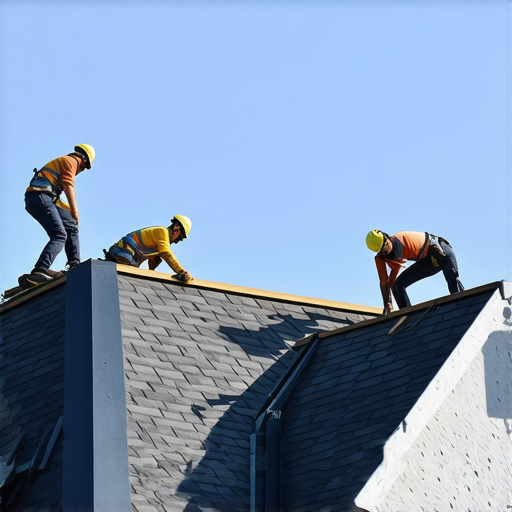
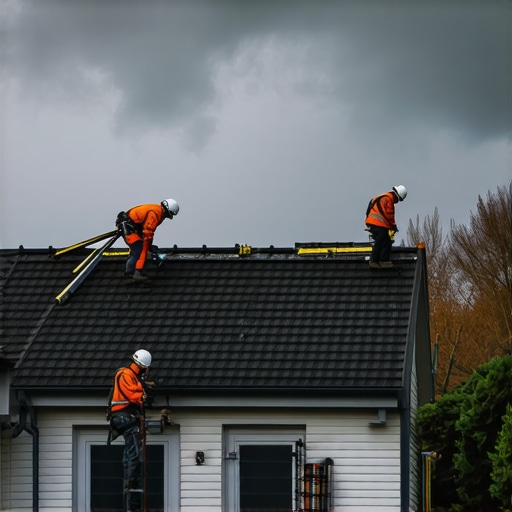
The sky goes that eerie shade of bruised-purple, the hail stops bouncing off your siding, and for about ten minutes, there is a heavy, humid silence. Then comes the sound of a hundred white vans descending on your neighborhood like vultures on a carcass. I’ve seen it every season for twenty-five years. These ‘storm chasers’ aren’t here to fix your home; they are here to harvest insurance checks. My old foreman used to say, ‘Water is patient. It will wait for you to make a mistake.’ But these guys? They aren’t patient. They are fast, loud, and gone before your first leak even starts to rot the rafters. If you want to avoid being their next victim, you need to understand the physics of a roof and the psychology of a scam.
The ‘Free Roof’ Mirage: How the 2026 Storm Chasers Operate
In the trade, we call them ‘tailgaters’—contractors who follow storm cells across state lines. They’ll knock on your door, show you a grainy photo of a bruised shingle, and promise you a ‘free roof’ by ‘waiving’ your deductible. Here is the first hard truth: waiving a deductible is insurance fraud. A legitimate contractor will never ask you to participate in a felony just to get a job. When they offer this, they have to make up that lost $1,000 to $5,000 somewhere else. Usually, it’s by hiring the cheapest sub-contracted labor they can find—guys who won’t know a cricket from a valley.
When these crews rush a job, they leave behind ‘shiners’—nails that missed the rafter or were driven at an angle. In a high-wind environment like Denver or the Plains, those shiners act as thermal bridges, pulling cold air into your attic and creating condensation drips that look like leaks but are actually self-inflicted wounds. If you aren’t careful, you’ll end up hiring local roofers who use scams just to pad their margins.
“A roof is only as good as its flashing.” – Old Roofer’s Adage
Mechanism Zooming: Why Hail Damage is Often Invisible to the Untrained Eye
A storm chaser will point at every little mark and call it ‘catastrophic damage.’ Real forensic roofing is about the physics of the material. On an asphalt shingle, a hail strike isn’t just a cosmetic dent. It’s a high-velocity impact that compresses the bitumen (asphalt) layer, fracturing the internal fiberglass mat. Once that mat is compromised, the shingle loses its ability to shed water. Over the next six months, the UV rays from the sun will bake the exposed bitumen, causing it to crack and curl. This is why you need to detect a roof leak fast before the structural plywood turns to mush.
On a commercial roofing project, specifically TPO roofing, the damage is even more insidious. TPO is a single-ply membrane. If hail is large enough, it can create micro-fractures in the TPO’s reinforcement scrim. You won’t see it from five feet away, but once the freeze-thaw cycle hits, water enters those micro-cracks, expands, and delaminates the membrane from the insulation board. Most ‘storm rush’ contractors don’t even carry the equipment to properly probe TPO seams. They’ll slap a patch on it and leave. I’ve seen thousands of dollars wasted because TPO roof patches fail within months when they aren’t heat-welded correctly on a cleaned surface.
The Red Flags: Spotting the ‘Trunk Slammer’
How do you tell a forensic-level local roofer from a fraud? Look at their documentation. A real local company has a physical office you can visit—not a P.O. Box or a temporary suite. They should be able to provide a Square-by-Square breakdown of the materials they intend to use. If their quote is significantly lower than others, they are likely skipping the Ice & Water Shield in the valleys or using generic underlayment that will degrade under a tile roof in less than a decade. You should always perform license checks for local roofers to ensure they aren’t using a ‘borrowed’ license from a retired contractor.
Another major red flag is the ‘Immediate Start.’ High-quality roofers are usually booked out for weeks, especially after a major storm. If a guy tells you he can start tomorrow morning with a crew he ‘just put together,’ run. That crew is likely day labor with zero training in the specific nuances of your roof’s geometry. They’ll blow through the installation, high-nailing the shingles so they don’t have the proper wind-uplift rating, and you’ll find your new roof in your neighbor’s yard during the next 60mph gust.
The Physics of Failure: Why Tile and Metal Require Different Vetting
If you have a tile roof, you are in the most danger during a storm rush. Tile is a lifetime material, but the underlayment is not. Fake roofers will often tell you the tiles are ‘totaled’ by hail just so they can sell a full replacement. In reality, concrete tiles can often withstand significant hail; it’s the flashing and the batten system that usually need attention. If they don’t mention the underlayment, they aren’t a roofer—they are a salesman. You should check if your tile roof quote is too low, because high-quality synthetic underlayment isn’t cheap.
For those considering a metal roof, the vetting process is even stricter. Metal expands and contracts violently with temperature swings (thermal expansion). If a contractor doesn’t use the correct clips or over-tightens the fasteners, the roof will literally ‘oil-can’ and buckle within the first year. Most storm chasers don’t have the specialized tools for standing-seam metal; they’ll try to talk you into an exposed-fastener system because it’s easier to slap together. Don’t fall for it.
“The building envelope is a system, not a collection of parts. If one component fails, the entire structure is at risk.” – International Residential Code (IRC) Commentary
The Insurance Adjuster Game
Fake roofers will try to act as your ‘public adjuster’ without a license. They’ll tell you they can ‘handle everything’ with the insurance company. While it’s helpful to have a contractor present during the adjuster’s inspection to point out legitimate functional damage, they cannot legally negotiate the claim for you in most states. A reputable pro will provide a detailed line-item estimate using software like Xactimate, which adjusters use, rather than a scribbled note on a yellow pad. If you suspect your contractor is hiding something, you might find hidden red flags to spot before hiring that could save your claim from being denied.
Conclusion: Protecting Your Investment
The 2026 storm season will be a gold mine for scammers, but it doesn’t have to be a nightmare for you. Remember that a roof is a complex piece of engineering designed to manage hydrostatic pressure and wind loads. It is not a commodity you buy out of the back of a van. Take your time. Check the references. Verify the physical address. And for heaven’s sake, if they offer to ‘pay’ your deductible, show them the door. Your home is too valuable to trust to someone whose only qualification is a ladder and a smooth tongue. Focus on residential roofing services you can’t skip like proper ventilation and high-grade flashing. That is how you survive the storm rush with your house—and your sanity—intact.