
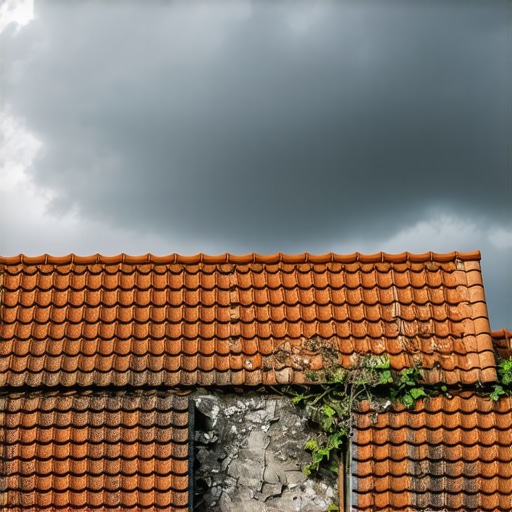
The Anatomy of a Slow-Motion Disaster
Water is patient. It will wait for you to make a mistake. My old foreman, a guy who had more scars than a forty-year-old cedar shake, used to growl that every time he saw a rookie rushing a valley installation. In my twenty-five years of forensic roofing, I’ve seen that patience rewarded a thousand times over, usually in the form of a living room ceiling collapsing during a midnight monsoon. As we look toward the 2026 storm season, that old adage has never been more relevant. Tile roofs are the heavyweight champions of the desert and coastal regions, but they have a glass jaw: the underlayment. Most homeowners look at their roof and see beautiful, sturdy concrete or clay tiles and think they are safe. They aren’t. The tile is just a watershed; the real roof is the black stuff underneath, and the sun is currently cooking it to a crisp.
When we talk about the physics of failure in a tile system, we are looking at a battle between thermal expansion and material fatigue. In a climate where the roof deck hits 160°F daily, the tiles expand and contract, grinding against the nails and the underlayment. By the time 2026 rolls around, roofs installed in the mid-2000s will be reaching a critical mass of degradation. If you don’t know what to look for, you’re just waiting for the forensic autopsy of your own home. Let’s look at the five red flags that indicate your roof is waving the white flag.
“The water-resistive barrier (underlayment) is the most critical component of a tile roof system, as tiles themselves are not waterproof.” – NRCA (National Roofing Contractors Association) Guidelines
1. The Slipped Tile and the ‘Shiner’
One of the most obvious signs of trouble is a tile that has migrated out of its original position. It looks like a missing tooth in a smile. But the danger isn’t the hole; it’s why the tile moved. Often, this is caused by a ‘shiner’—a nail that missed the batten during installation. Over years of thermal shock, that nail wiggles loose, allowing the tile to slide down. When that tile moves, it exposes the organic felt underlayment to direct UV radiation. In the Southwest, exposed felt will disintegrate in less than 90 days. Once that felt turns to powder, the next rain isn’t hitting a roof; it’s hitting your plywood. If you notice even one tile out of place, you need tile roof maintenance immediately before the 2026 monsoons turn that small gap into a waterfall.
2. Debris Damming in the Valleys
The valley is where two roof slopes meet, creating a high-volume highway for rainwater. On a tile roof, these are often ‘closed’ valleys where the tiles are cut to meet in the middle. Over time, leaves, dust, and bird nests accumulate under the tiles in these valleys. This creates a dam. When the water can’t flow down the valley, it moves sideways. This is where capillary action takes over. Water has a natural surface tension that allows it to ‘climb’ or move horizontally across the underlayment. If the water is backed up by a dam of desert muck, it will find its way over the side-lap of the felt. I’ve seen 20-year-old roofs where the plywood in the valleys had turned to a consistency I call ‘oatmeal’ because the owner never cleared the debris. If you see dirt or weeds growing from your roof valleys, you are inviting a catastrophic failure.
3. The Brittle Felt Test
If you have access to your roof, find a spot near the eave where you can safely lift a tile. The underlayment should be flexible. If you touch it and it cracks like a dry cracker, your roof is effectively dead. The plasticizers—the oils that keep the asphalt flexible—have been baked out by decades of heat. This is common in older commercial roofing and residential tile alike. When the underlayment is brittle, it cannot seal around the nail penetrations. Every nail hole becomes a potential leak point during high-pressure storm events. If you’re unsure about the state of your materials, don’t try to fix it yourself; tile roof repair DIY mistakes often involve walking on these brittle tiles and snapping them, causing even more damage to the fragile membrane beneath.
“A roof is only as good as its flashing.” – Old Roofer’s Adage
4. Cracked Mortar Caps and Clogged Crickets
Mortar is often used at the ridges and hips of a tile roof to seal the gaps. Because mortar is rigid and your house is dynamic (it moves!), the mortar eventually cracks. These cracks are straw-sized entry points for wind-driven rain. Additionally, check your ‘cricket’—the small peaked structure behind a chimney designed to divert water. If the flashing around the cricket is rusted or the mortar is failing, water will pool behind the chimney. This hydrostatic pressure forces water under the tile and into the structure. Local roofers who are ‘trunk slammers’ will often just smear some caulk over these cracks. That’s a Band-Aid on a bullet wound. You need a contractor who understands how to properly re-mud those hips and ensure the secondary water resistance is intact.
5. The Telltale Shadow on the Ceiling
By the time you see a brown spot on your ceiling, the ‘autopsy’ has already begun. Water rarely travels in a straight line. It might enter at the ridge, travel ten feet down a rafter, and finally drip onto your insulation. By the time the drywall is wet enough to show a stain, the insulation is likely moldy and the structural wood is saturated. If you see these spots, you are past the point of preventative maintenance. You are now in the territory of emergency intervention. When vetting help, be wary of low-ball offers. Is your 2026 tile roof quote too low? If it is, they are likely skipping the critical step of replacing the flashing and are just ‘pin-flicking’ broken tiles. For larger structures, you might even be considering a switch to commercial roofing solutions, but for residential tile, the quality of the underlayment replacement is the only thing that will save you from the 2026 storms.
The Final Verdict
Don’t wait for the sound of a drip in the bucket to tell you your roof is failing. These five signs are the early warnings of a system that is tired and ready to retire. The 2026 storm season won’t care if you didn’t have time to check your valleys or if you ignored that slipped tile. Water is patient, but you shouldn’t be. Get a real pro up there to do a forensic look at your underlayment before the clouds turn gray.