
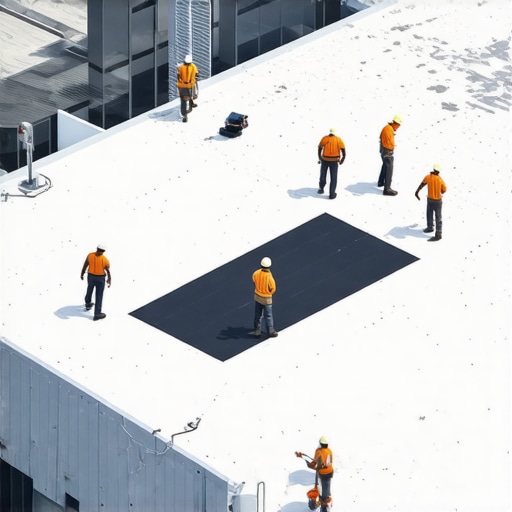
The Price of Ignorance on the High-Heat Roof Deck
My old foreman used to say, ‘Water is a patient assassin. It doesn’t need a door; it just needs a microscopic mistake and enough time to rot your bottom line from the inside out.’ After twenty-five years of forensic investigations on commercial rooftops, I’ve seen that ‘assassin’ retire more facility managers than I can count. We are standing in an era where TPO (Thermoplastic Polyolefin) dominates the commercial market, yet the level of incompetence in its installation is staggering. By 2026, the cost of raw materials and labor has reached a point where you cannot afford to do this twice. When I walk onto a roof in the blistering heat of the Southwest, where the surface temperature hits a bone-searing 160°F, I don’t just see a white membrane. I see a ticking clock of thermal expansion and contraction that most local roofers are completely unprepared to handle.
Mistake 1: The 45-Mil ‘Economy’ Trap
In the world of commercial roofing, thickness isn’t just a spec; it’s your survival window. Many building owners opt for a 45-mil TPO membrane to shave 15% off the initial bid. In a desert climate like Phoenix or Las Vegas, that is financial suicide. The UV radiation here doesn’t just ‘hit’ the roof; it bombards the polymer chains. A 45-mil sheet has a weathering layer—the stuff above the reinforcing scrim—that is dangerously thin. Once that top layer erodes, the scrim is exposed, and capillary action begins. Water wicks into the reinforcement, travels horizontally, and suddenly you have a leak forty feet away from the actual puncture. Always spec at least 60-mil or 80-mil for high-UV zones. The extra ‘meat’ on the membrane is the only thing standing between you and a premature tear-off.
“The service life of a thermoplastic roof membrane is directly related to the thickness of the material over the scrim and the quality of the polymer formulation.” – NRCA Manual excerpt
Mistake 2: The ‘Cold Weld’ Sabotage
TPO is a thermoplastic, meaning the seams are heat-welded to create a monolithic sheet. It sounds simple, but it’s where most commercial roofing projects fail. I’ve seen ‘professionals’ use hand-welders on long runs because they didn’t want to haul a robotic welder up the hatch. The result? Inconsistent seam strength. If the temperature of the air-welder isn’t perfectly calibrated to the ambient air temperature and the speed of the technician’s hand, you get a ‘cold weld.’ It looks fine to the naked eye, but as soon as the first cold front hits and the building shrinks, those seams pop like a cheap zipper. I use a probe on every inch of a seam. If that probe sinks in, the weld is a fraud. You aren’t just paying for plastic; you’re paying for the molecular bond.
Mistake 3: Ignoring the Physics of Thermal Expansion
Commercial roofing isn’t static. In the Southwest, a TPO roof can swing 80 degrees in temperature in less than twelve hours. This causes massive movement. A common mistake I see local roofers make is failing to account for how the membrane pulls at the perimeter. If they don’t use heavy-duty RPF (Reinforced Perimeter Fastening) strips, the membrane will ‘bridge’ at the angle change. It pulls away from the wall, creating a void. Eventually, the membrane stretches to its breaking point or pulls the flashing right out of the masonry. It’s the sound of a drum skin tightening until it snaps. You need a contractor who understands the physics of ‘creep’ and tension, not just someone who can roll out a square of material.
Mistake 4: The ‘Shiner’ and Improper Fastener Density
While we don’t use nails in the traditional sense for TPO, we use heavy-duty screws and plates. A ‘shiner’ in my world is a fastener that missed the structural purlin or the heavy-gauge decking. I’ve walked on roofs that felt like walking on a sponge because the fasteners were backing out. This happens when the wrong fastener is used for the deck type—say, using a standard screw into a gypsum deck without a pull-out test. As the wind moves over the building, it creates a vacuum (uplift). If the fastener density is wrong, or if they missed the ‘meat’ of the deck, those plates will start to vibrate. Over time, they back out, punching a hole through the TPO from the bottom up. It’s a self-inflicted wound that drains budgets.
Mistake 5: Neglecting the Cricket and Proper Drainage
Water is heavy. If your roof has ‘ponding water’—standing for more than 48 hours—you have a structural liability. I often find that local roofers skip the installation of a cricket. A cricket is a peaked diverter built behind large HVAC units or near curbs to direct water toward the scuppers. Without them, water stacks up behind the unit. TPO is resistant to water, but it isn’t a swimming pool liner. Standing water collects silt and dirt, which creates a ‘magnifying glass’ effect under the sun, baking the membrane even harder. It also encourages biological growth that eats away at the seam adhesives used in flashing. If your roofer doesn’t talk about ‘tapered insulation’ or ‘slope-to-drain,’ fire them before they step on the ladder.
“A roof is only as good as its flashing and its ability to shed water rapidly.” – Old Roofer’s Adage
Mistake 6: The Flashing Shortcut
Flashing is where the skill is. Any ‘trunk slammer’ can roll out the field, but it takes a craftsman to wrap a round pipe or a square curb. I see too many guys using ‘pitch pockets’—metal tins filled with sealer—as a catch-all fix. Pitch pockets are high-maintenance disasters. They crack, they leak, and they need to be topped off every year. A real forensic pro wants to see ‘target patches’ and heat-welded boots. If I see a bunch of caulk smeared around a pipe penetration, I know that roof won’t last five years. Caulking is a temporary Band-Aid; heat-welding is a permanent surgical fix.
Mistake 7: The ‘Paper’ Warranty Delusion
In 2026, many owners are still being sold on ‘Lifetime’ or ’30-Year’ NDL (No Dollar Limit) warranties. Here is the cynical truth: those warranties are often written to protect the manufacturer, not you. They require strict maintenance logs that most owners never keep. If you don’t have a professional cleaning your scuppers and inspecting the seams twice a year, that warranty is as useful as a screen door on a submarine. The mistake is thinking the warranty replaces a quality install. You want a 10-year workmanship warranty from the local roofer and a manufacturer’s warranty on the material. If they won’t stand behind their labor for a decade, they don’t trust their own welds.
The Final Inspection
Choosing a commercial roofing partner isn’t about finding the lowest number on a spreadsheet. It’s about finding the person who understands the smell of hot plastic and the sound of a properly calibrated welder. Don’t let a ‘local roofer’ treat your commercial asset like a residential shingle job. TPO requires a different level of precision. If you ignore the details—the fasteners, the mil-thickness, the slope—you aren’t saving money; you’re just financing a future disaster. Get a forensic-level inspection before you sign that contract. Your budget depends on it.
Comments are closed.