
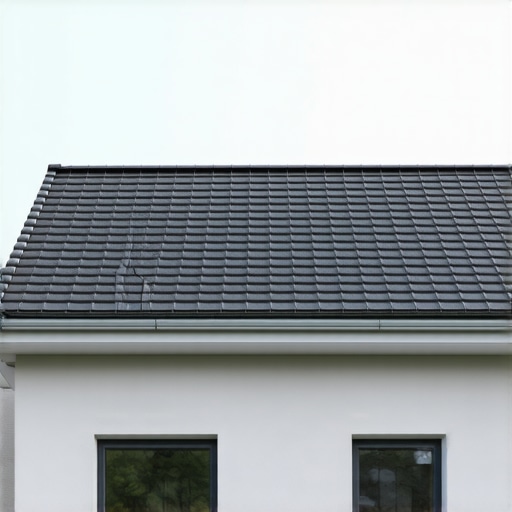
The Forensic Reality of a Baking Roof
Walking on that roof felt like walking on a sponge. I knew exactly what I’d find underneath. It was a mid-August afternoon in the high desert, 104°F in the shade, but on that white Thermoplastic Polyolefin (TPO) surface, the thermometer was screaming at 135°F. You’d think a white roof would be cool, right? That’s what the brochure promised. But as I peeled back a section near a scupper, the smell of cooked adhesives and damp, rotting ISO board hit me like a physical punch. This wasn’t just a leak; it was a systemic energy failure. The facility manager was wondering why his HVAC units were blowing 24/7 and still losing the battle. The truth was written in the water-logged insulation: his roof had become a massive thermal battery, storing heat and radiating it straight into the building. Commercial roofing isn’t just about keeping the rain out; it’s about managing the physics of heat. If you’re looking at your 2026 budget and seeing energy costs spiraling, you need to look at the assembly, not just the surface.
“A roof is only as good as its flashing.” – Old Roofer’s Adage
Most local roofers will tell you TPO is a set-it-and-forget-it system. They’re wrong. In our Southwest climate, UV radiation is a relentless hammer. It doesn’t just fade the color; it breaks the polymer chains. When that happens, the Solar Reflectance Index (SRI) plummets. A new TPO roof might reflect 80% of solar energy, but a neglected, dirty, or degraded one might reflect less than 50%. That 30% difference is what’s killing your bottom line. We need to talk about commercial roofing as a thermal envelope, and that starts with understanding why 7 TPO roofing mistakes that drain commercial budgets are so prevalent. It’s often the small, invisible failures that lead to the biggest energy drains.
Fix 1: The Albedo Restoration (More Than Just a Wash)
The first fix is deceptively simple but widely ignored: professional cleaning and SRI restoration. In the desert, dust isn’t just dirt; it’s an insulator for heat. When a layer of fine silt settles on your TPO, it changes the emissivity of the membrane. Instead of reflecting infrared radiation back into the atmosphere, the dirt absorbs it and conducts it into the membrane. This is where mechanism zooming matters. Think about the molecular level: the white pigment in TPO is usually titanium dioxide. When covered in dust, those particles can’t do their job. I’ve seen roofing systems where a simple, high-pH enzymatic cleaning dropped the surface temperature by 20 degrees instantly. This isn’t a job for a guy with a pressure washer who doesn’t know a square from a cricket. Too much pressure and you’ll scour the weathering layer right off the scrim, leaving the polyester reinforcement exposed to the sun. Once the scrim is visible, your membrane is toast. You need a local roofer who understands the chemistry of TPO cleaners to ensure you aren’t voiding your warranty while trying to save on cooling.
Fix 2: Killing the Thermal Bridges
If you could see your roof through an infrared camera, you’d likely see a grid of hot spots. These are your fasteners. In a standard mechanically attached TPO system, every screw and plate acts as a thermal bridge. They are literal heat conduits, drilling through your insulation and piping heat directly into the metal deck. Over thousands of square feet, this adds up to a massive energy leak. The fix? Induction welding. Instead of the fastener going through the top membrane, we use specialized plates that are welded to the underside of the TPO using electromagnetic heat. This allows for a monolithic surface without the “ghosting” effect of fasteners. If you’re stuck with a mechanically attached system, the 2026 fix involves checking for “shiners”—fasteners that missed the purlin or have backed out due to thermal expansion. These gaps allow air to move between the insulation boards, a process known as an “attic bypass” in residential terms, but in commercial TPO, it’s a budget killer. This is why why commercial roofing inspections fail—most guys don’t check the fastener integrity under the laps.
“Buildings should be designed to be climate-responsive, utilizing the roof as the primary thermal shield.” – Vitruvius (Adapted)
Fix 3: The Air-Seal and Perimeter Lockdown
Physics doesn’t care about your warranty. It cares about pressure. Most energy loss in a tile roof or a flat TPO system occurs at the edges. If your edge metal isn’t properly crimped or if the air barrier is breached at the parapet wall, your roof acts like a giant bellows. Every time the wind blows, it lifts the membrane slightly, sucking conditioned air out of the building and pulling hot, outside air in. This is called wind uplift, but the energy consequence is “mechanical cooling loss.” To fix this, we look at the termination bars and the valley transitions. We ensure that the air seal is continuous from the wall to the roof deck. Many rooofing contractors skip the air seal because it’s hidden under the flashing. But a forensic tear-off usually reveals the truth: black soot marks on the underside of the insulation where air has been pumping through for years. You can’t just throw more R-value at a building that’s leaking air like a sieve.
Fix 4: High-Density Cover Boards
If you’re planning a partial recovery or a repair in 2026, the most effective energy move is adding a high-density (HD) cover board, like a coated glass mat gypsum or a high-density ISO. Standard polyiso insulation actually loses its R-value as it gets hotter. It’s a dirty secret in the industry—R-value is usually tested at 75°F. When the roof hits 140°F, that R-6.0 per inch might drop to R-5.0. By adding a dense cover board, you create a thermal break that protects the primary insulation from extreme temperature swings. It also prevents the “sponge” effect I mentioned earlier. If someone drops a tool or a hailstone hits the roof, the cover board absorbs the impact, preventing the insulation from crushing. Once insulation is crushed, its thermal resistance is gone. This is where you find reliable local roofers who don’t just quote the cheapest 45-mil membrane but actually explain the long-term ROI of an 80-mil system with a dedicated cover board. Don’t let a “trunk slammer” talk you into a thin sheet of TPO with no protection just to save a few bucks today; you’ll pay for it every time the electric bill arrives.
The Trap of the Lifetime Warranty
I’ve been on enough forensic calls to know that a “Lifetime Warranty” is often just a marketing shield for poor workmanship. Most of these warranties cover material defects, not the energy efficiency or the labor of the guy who didn’t know how to calibrate his hot-air welder. If your seams aren’t welded at the right temperature—typically between 800°F and 1140°F depending on ambient conditions—they might look fine today, but the first freeze-thaw cycle will open them up. Capillary action will then draw moisture into the assembly, and once that insulation is wet, its R-value drops to zero. You’re essentially paying to cool the sky. When hiring, look for a contractor who can explain the physics of their weld and the importance of a probe test on every single foot of the seam. If they can’t speak trade, they shouldn’t be on your roof. The 2026 energy landscape is going to be brutal; don’t let your roof be the reason your facility’s budget goes into the red.
Comments are closed.